
Walking the path before decoding the map
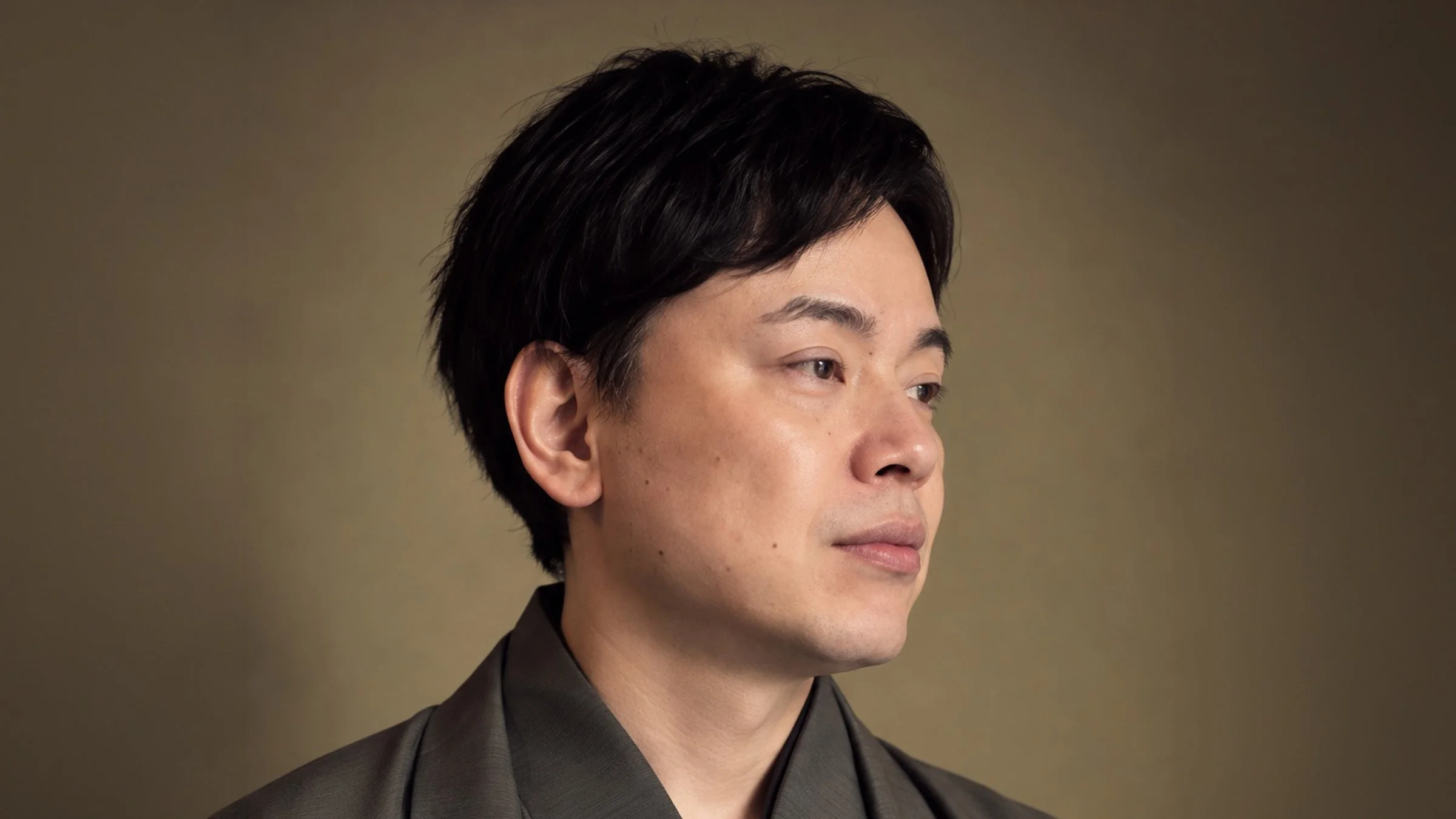
Yusaku Iida ‘NYORAI’, makes music that feels like stepping into a landscape of shifting memories. His upcoming EP, Senpenbanka (千変万化), takes its title from a Japanese concept of endless, kaleidoscopic transformation. Yet beneath the fluid, almost Zen-like textures and sharp electronic programming lies a precise, ancestral grounding that feels anything but ephemeral. With the full EP due out on 9 October and the album launch on 9 September, Yusaku Iida ‘NYORAI’ now unveils its next chapter with the single 雲閑 (Un kan). At the heart of this work are themes of the silent inner observer, trusting instinct over logic, and the enduring power of 1,800-year-old poetry to illuminate the modern human experience.
Senpenbanka is all about constant change with one hidden, unchanging core. In your own personality, where do you feel that tension the most between “always shifting” and “this part of me never moves”?
I have always lived with a curiosity about many different things. Of course, music is a major part of my life, but I also love novels, films, paintings, objects and other forms of human creativity. I am deeply interested in history and often read about how people have lived across different times. I also write fiction and poetry myself. One day I may be making music, the next day I might be writing a poem, and then I return to music again. Even I sometimes feel that my interests are all over the place. I am also planning to try making a short film in the future. If there is one part of me that never changes, it is my curiosity about human beings. I am always drawn to what people create, whether it is beautiful or not, and I want to understand where it comes from. That curiosity extends not only to music, but also to history, film, sound, silence and human nature itself. I may be constantly changing, but at the centre of all those changes there has always been the same curiosity about people, ever since I was old enough to become aware of the world.
You’ve said you usually make the music first and only understand what it means later. In everyday life, does that reflect how you operate too – acting on instinct first and only decoding your feelings afterwards?
Yes, I think that’s true in almost every aspect of my life. I usually act on instinct first, and music is no exception. More often than not, I don’t fully understand why I’m creating something at the moment I’m making it. Only later do I begin to understand what it meant to me. Sometimes it takes weeks, sometimes years. Looking back, there have been many moments in my life that only made sense long after they happened. In a way, it might even be a little pathological. (laughs) There is nothing spiritual or mystical about it — I simply tend to follow what resonates with me before I can explain why. Whether it’s music, writing, or the next unexpected thing that catches my curiosity, I’ve always trusted my instincts first and found the meaning afterwards. I don’t consciously choose a direction and then move toward it; more often, I start walking and only later discover why I chose that path. That’s simply how I’ve lived my life.
Your music bridges cold machine logic and a very fluid, Zen‑like feeling – two energies that don’t obviously belong together. In your day‑to‑day life, is there a quirky habit or way of thinking that perfectly reflects this mix of a highly logical brain and a quietly spiritual side?
I have spent my entire life wondering what it means to become more myself. To put it simply, I have always been searching for who I am. Since I was a child, I’ve had a strange feeling that I can only live my life as myself. I cannot become anyone else, and no one else can become me. That realization has quietly stayed with me for as long as I can remember. I was always observing the people around me — the adults in my life, other children, and the situations unfolding in front of me. Even now, I feel there is a calm observer living somewhere inside me, constantly stepping back and looking at both myself and the world. For example, if I’m enjoying a barbecue with friends, there are always two versions of me present. One is genuinely enjoying the moment. The other is quietly observing everything and asking, “Why am I here, right now?” There is always a part of me that is thirsty for meaning. Perhaps that sounds a little like Ingmar Bergman’s Persona, (laughs). So maybe my strangest habit is that I never stop trying to understand the person I already am — from as many different angles as possible.
These tracks feel like fragmented memories or places rather than a linear story. Do you have any personal habits or quirks around memory – the way you remember seasons, cities, or small moments – that you think directly shape how you build these sound worlds?
I don’t have a habit of organizing my memories or keeping detailed journals. Even when I try, I usually stop quite quickly. Memories tend to find me rather than the other way around, and very often they appear while I’m making music. Sometimes it’s the image of a sunset from a day I had completely forgotten. Sometimes it’s the smell of rain while walking alone through Shibuya, or the feeling of touching an unfamiliar patch of grass as a child. Small moments that seemed insignificant at the time somehow return to me years later and quietly ask to be remembered. Because of that, life itself sometimes feels a bit like déjà vu. I don’t consciously write music about memories; memories seem to find me while I’m making music. And perhaps that’s why my music feels more like fragmented memories and places than a linear story.
Your ancestry is tied to disciplined samurai heritage, yet your EP title Senpenbanka (千変万化) celebrates constant transformation and change. How do you experience that inner dialogue between a very rooted, traditional part of you and a side that always wants to morph and drift?
I don’t feel that tradition and change are in conflict with one another. To me, they have always existed in dialogue. Tradition gives birth to change, and change eventually becomes a new form of tradition. They are simply part of the same continuous process. In many ways, I think it is about understanding what is worth carrying forward while still living fully in the present.
That may be one reason why I love reading history and classical literature. At the moment, I’m reading the poetry of Cao Cao — a warlord, politician and poet who lived during China’s Three Kingdoms period nearly 1,800 years ago. What always surprises me when I read people like him is how little human nature has changed. No matter how advanced or convenient our world becomes, the essential experiences of being human remain the same: joy, conflict, sorrow, hope and the search for meaning. Modern people still seek wisdom from historical figures because what they wrote continues to resonate with us. If ancient ideas had nothing to offer, we simply wouldn’t keep reading them. That is why I don’t see Senpenbanka and the spirit of the samurai as opposites. To me, they are just two different ways of expressing the same idea: to keep evolving without losing who you are.