
The spectacle of wreckage
The spectacle of wreckage demands a story. Damage must become wisdom, survival must prove growth, and the person emerging from chaos is expected to explain what it all meant. Public confessions, recovery memoirs and carefully staged returns turn private upheaval into a recognisable drama, complete with a life before and a corrected life after. The reality is less orderly. A person can leave something destructive without losing every attachment to it. Danger and pleasure may have occupied the same rooms, among the same people, inside the same memories. Recovery can be necessary while still involving grief. The spectacle prefers a clear conclusion; lived experience rarely provides one.
Emilie Reid’s “House of the Silent” begins where that conclusion fails; describing the song as emerging from the contradictions of getting sober, although she does not present it as a strictly autobiographical account. That qualification opens the subject rather than weakening it. Reid is not making herself the exemplary survivor, nor asking her audience to treat the song as a confession. She approaches the experience from a slight distance, considering what happens when sobriety removes the source of destruction but not the appetite beneath it. Hunger does not disappear. It changes direction. What once found expression through excess might return as restlessness, nostalgia or an attraction to the intensity of a former life. Stability creates safety, but it may also create enough quiet for those displaced desires to be heard.
This is where the song’s references to Prince, Donna Summer and Studio 54 become more than a catalogue of influences. They evoke a mythology of abandon that culture continues to preserve long after confronting its consequences. Studio 54 survives in the popular imagination through photographs of bodies, celebrities and impossible nights, a place where ordinary restrictions appear to have been suspended. The image is glorious because it ends at the edge of the frame. We do not see the morning, the repetition or the moment when liberation begins to resemble compulsion. The past is granted the same selective lighting. Memory can recover the electricity of a destructive period without restoring the fear that accompanied it. It does not falsify what happened so much as preserve one emotional truth at the expense of another.
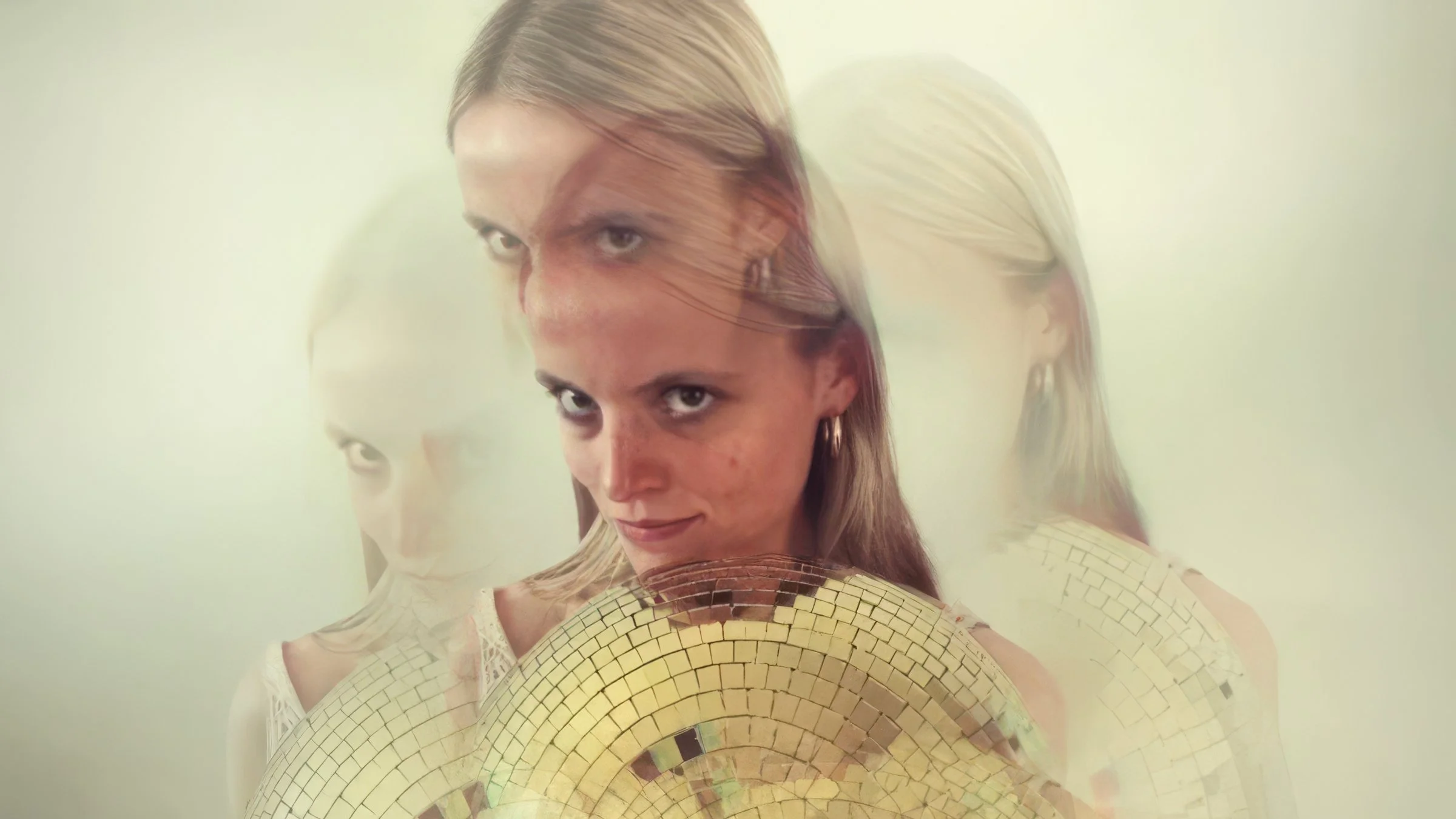
Reid’s visual world seems to understand this instinctively. There is a faded, almost instant-film intimacy to it, softened by warmth and unsettled by small surreal touches. The images feel personal without becoming explanatory, as if their context has been deliberately left outside the picture. Looking at them, I do not find myself trying to solve Reid as a personality. I return instead to memories of my own whose atmosphere has survived more clearly than their facts: rooms remembered through a particular colour, people reduced to gestures, periods that feel beautiful from a distance despite what they demanded at the time. The effect is not simple nostalgia. It is the discomfort of recognising that memory has an aesthetic sense of its own. It arranges the past, favours certain images and sometimes makes what hurt us look strangely inviting.
“House of the Silent” does not correct that distortion or tell us how to judge it. Reid remains outside the matter just enough to avoid turning the song into instruction, spectacle or a celebration of damage. She does not dispute the value of leaving a destructive life, but neither does she pretend that change produces an entirely new person. The former self continues to exist in memory, carrying pleasure alongside injury and longing alongside relief. Perhaps that is what gives the silence of the title its weight. It is not simply peace after chaos, but the space in which everything that has survived the change becomes perceptible. Reid offers no method for reconciling those feelings. She allows them to remain contradictory, leaving us with the less marketable truth that a better life may still contain grief for the life it replaced.