
The rise and fall of Level Plane
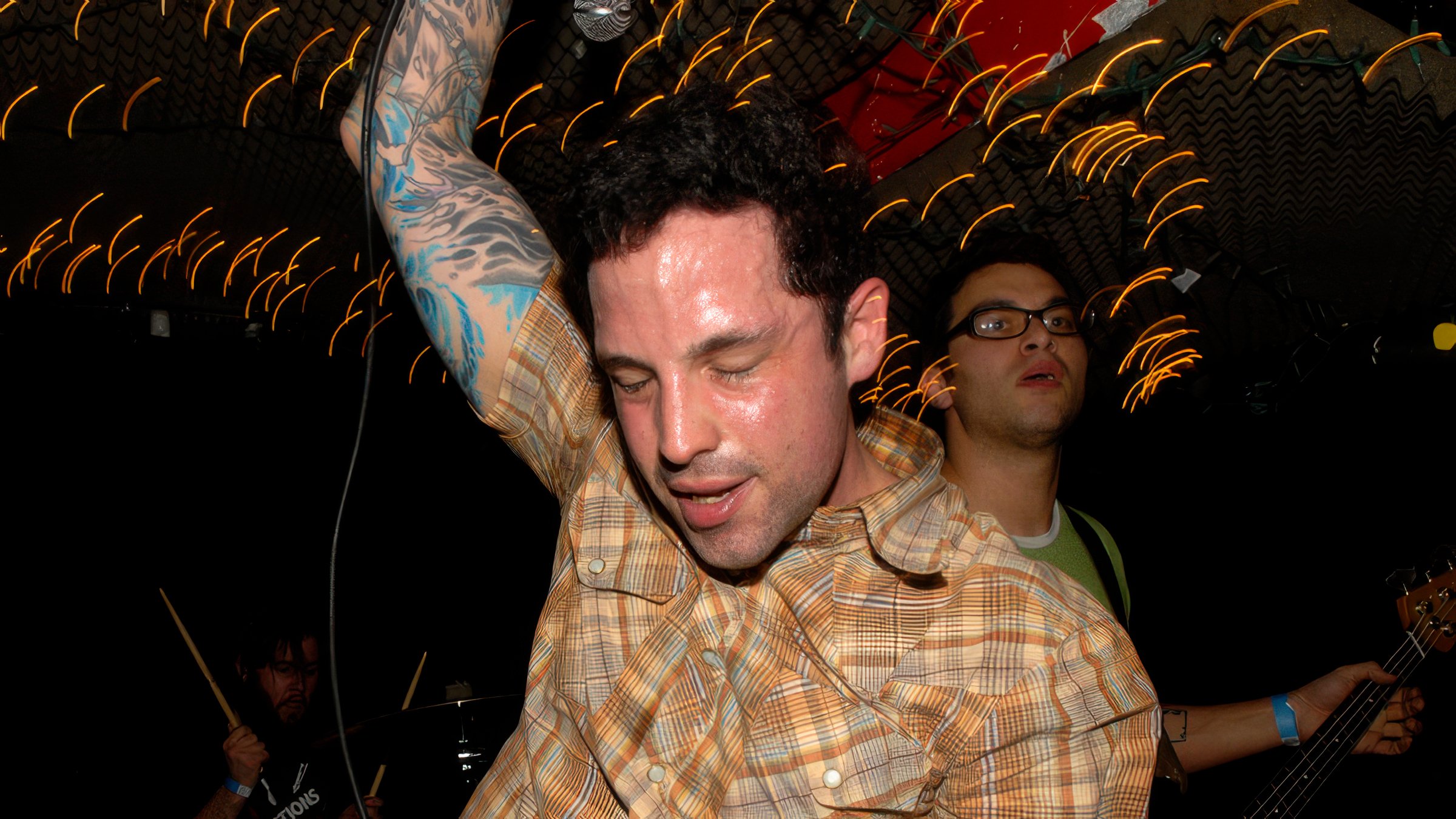
In an interview published over two decade ago, Greg Drudy from Level Plane told Delusions of Adequacy he hoped his label would still be putting out records in ten years’ time. These days, the label’s official website doesn’t even exist anymore, and neither does Level Plane. If you check out their old homepage, the links provided will send you to discounted rice cookers, or maybe even thousand-watt pump espresso coffee machines in black or, I don’t know, puce and beige? Either way, it’s not music. Drudy’s story is tangled up with the bands that surrounded the label. He played in Saetia and later Hot Cross, alongside his brief early involvement with Interpol, while Level Plane became home to bands including Pg. 99. When asked how the label got started, Greg seemed to give an honest and rather brazen response, telling the journalist: “One night we were assembling copies of the Saetia 7” and I was also looking through the current issue of National Geographic. An author was discussing photography and the need for a level plane. It seemed like an interesting phrase and we were at a loss for anything else at the time.” I like to imagine Greg began shipping those copies of Saetia from the same dimly lit basement in New York City.
Saetia was a band formed in that same city back in 1997. This was the year David Bowie performed his 50th birthday concert at Madison Square Garden before receiving his star on the Hollywood Walk of Fame. These late-nineties screamo bands were certainly not influenced by the pop sound of David Bowie; their influences were far more esoteric and subversive. Saetia’s name points instead towards “Saeta”, a piece on Miles Davis’ Sketches of Spain, itself named after a form of Spanish religious song traditionally associated with Holy Week. The technical influence of jazz can be heard too, with Saetia’s softer, melodic hesitations breaking up moments of intensity. Parallels continue with their instrumentals sounding evocative of personal difficulty, recalling the emotional directness of blues music with its shouts and clamour. This is, I suppose, the heart and soul of their brand of screamo, played out to the point where it has found caricature in the cultural mainstream.
Jeff Mitchell, writing for the Iowa State Daily, once offered a useful description of skramz: “There is no set definition of what [this] screamo sounds like, but screaming over once-deafeningly loud rocking noise and suddenly quiet, melodic guitar lines is a theme commonly affiliated with the genre.” This is, of course, a simplification of skramz, but a useful simplification nonetheless. Whilst the initially jarring and often repellent nature of this sound has found little commercial success, the influence of these bands has travelled across the globe, from Malaysia to Brazil.
Essentially, skramz emerged as a categorical term used to distinguish the screamo of the 1990s from the more mainstream music that would later inherit the screamo label, although the boundaries and even the validity of the term continue to be debated. Aside from Saetia, examples can be found in bands such as Orchid and Pg. 99 and, arguably, more experimental groups such as Circle Takes the Square. Released in the same year as Saetia’s formation, I Hate Myself’s 1997 song ‘Caught in a Flood With the Captain of the Cheerleading Squad’ is a good example of the soft/loud dynamic associated with the genre.
More introspective than punk rock, skramz can feel like an aggressive sound made deliberately disagreeable; it’s dissident beyond recognition, like how punk might sound if it took itself seriously. Arguably, punk has become a relatively safe genre these days, boasting a proven track record when it comes to mainstream profitability. Really, it’s no wonder punk might just be seeing a resurgence. Skramz, on the other hand, continues to be an object of parody and satire, despite the lasting influence of people like Greg Drudy, Billy Werner and their associated bands.
Drudy himself was Interpol’s original drummer, playing with the group during its formative period before leaving in 2000, years before albums such as Turn on the Bright Lights established the band internationally. He subsequently became part of Hot Cross, formed by musicians associated with Saetia and other bands from the same scene. Hot Cross continued until going on indefinite hiatus in 2007. In a sad turn of events, Level Plane ceased operations in 2009. Today, the legacy of Drudy’s label survives through a cult following and through listeners tracing the connections between the bands associated with skramz. They’ll never forget where Level Plane started: in a basement in New York City, Greg’s National Geographic laid out between coffee cups and an ashtray of half-smoked cigarettes.