
If you want safe ambient, listen to something else
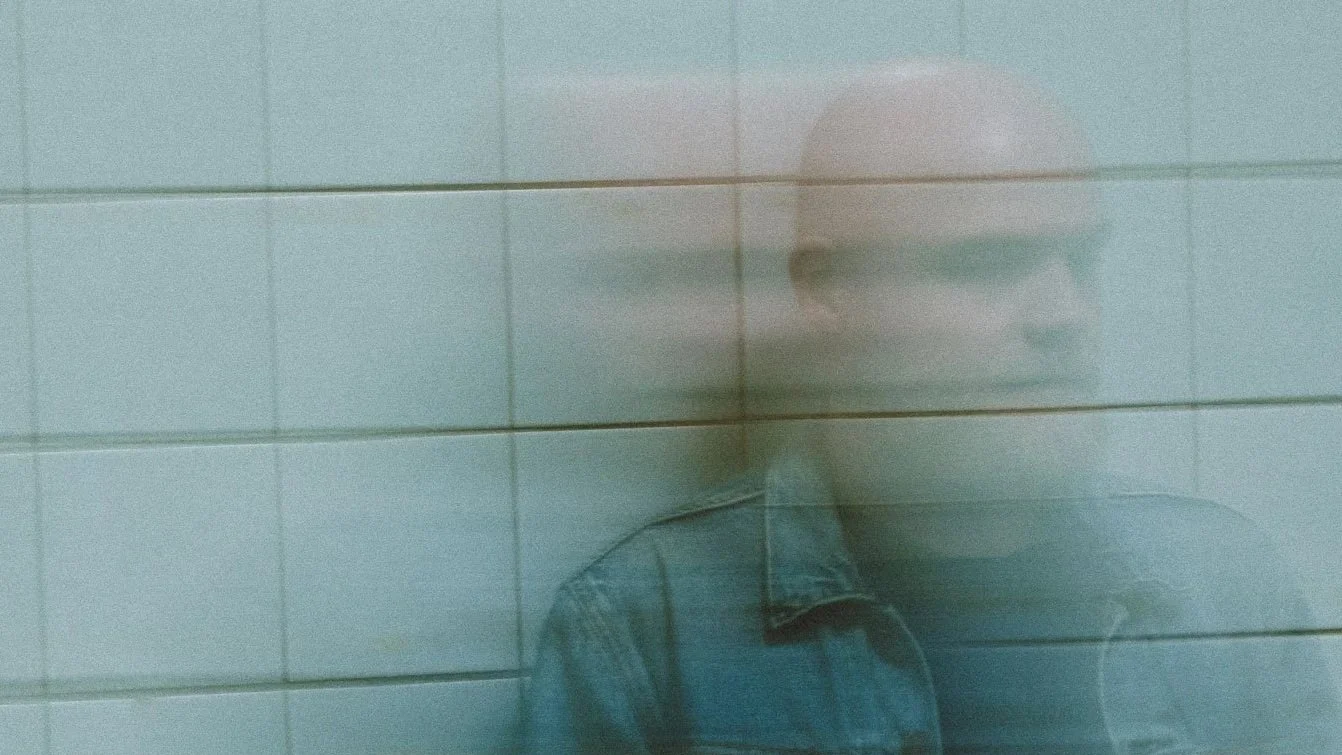
In a year when artists are told to simplify and “pick a lane,” Ard Bit quietly did the opposite: five ambient and sound‑art releases, shifting between studio work, nature, installations and more abstract explorations. His album, Juxtaposed, pushes that unruly energy further — a deliberate clash of organic field recordings and digital structures, where human vulnerability rubs against cold technological space. Across its layers, Ard Bit treats music less as background and more as a kind of sonic diary of surrender, introspection and friction. We spoke with him about slow processes, so‑called flaws, and the strange creative freedom that comes from refusing to stay in one fixed role.
Your work often blends carefully composed electronics with very tactile field recordings. Can you describe a moment where you stopped what you were doing in daily life to capture a sound, simply because the texture was too good to ignore?
In my daily life I don’t normally walk around with a field recorder. When I travel, it’s different. I always bring a recorder and maybe I notice sounds even more, probably because I’m in a different environment where sounds feel fresh and different. It can be a field where it’s extremely quiet, with only the buzzing of a fly, a breath of wind, the call of a hawk, etc. But also a market where a foreign language is being spoken; combined with the atmosphere, that is magical to me. Water fascinates me too; every stream, river and creek sings its own song. It’s always unique, but only if you really listen. I have many recordings of water that I don’t even always use in compositions, but I just have to record them, even if it’s only for one minute. I also like recording with a geofon, a contact microphone that registers vibrations in solid materials instead of sound waves in the air. This way, for example, an electricity pylon becomes a resonating body. I made an interesting recording with the geofon in Bosnia. I was walking past a fence with rusty barbed wire. The image alone was already beautiful, the rust with the blue sky and the beige grass. I put the geofon on the wire and started to ‘perform’: pulling, plucking, bowing, tapping… I got really excited about it. But actually, I very often stop when I hear a sound and think: I have to record this. And if I don’t, it keeps bothering me and I end up walking back anyway, haha.
From the outside, a studio can look like pure chaos. In your own workspace or DAW, is there a particular way you organise things that might seem messy to others, but actually reflects a very personal, logical system for you?
I’m very structured and I don’t like mess for too long, so I often have to organise things first to make space for creation. But in the moment of creation it can get quite messy: cables everywhere, instruments all over the place and many layers of sound in the DAW. At that moment I understand exactly how everything fits together. If I don’t organise it afterwards, I get lost when I pick it up again later. The moment of creation and the moment of finishing can be very far apart. My HDD is also quite full. I have folders with experiments and work in progress; one contains the creative moments and the other the further developments. If I can’t find something, I go through everything (or search by date) and then discover little gems from other sessions that inspire me and make me forget what I was originally looking for ;) For my field recordings I’ve developed a quite strict system. During a trip I make many recordings in different locations and with different recorders and microphones. If I don’t bring some structure into that, a few months later I really don’t know what is what anymore. So I keep a log of the recordings with the date, location, recorder, microphones and other information, and while sorting them out I give the files fixed names with the date, time, location and a short description. This way I can still find where and when something was recorded years later. A simple Excel sheet works fine for me.
Artists with many interests often move between different mediums or rabbit holes. Beyond music, what other activities or fascinations are currently pulling your attention — and how do they quietly filter back into your sound art?
I’m very interested in the unknown and how to reach it mentally. That started when I learned more about the ego, that everyone has an ego and what the ego can do when you’re not aware of how it works. I started reading a lot about it and became more and more interested in consciousness, the workings of the pineal gland, meditation and the experience of other dimensions. But at some point, just reading about it wasn’t enough for me. I wanted to experience it too. I had a very direct experience of this during two ayahuasca ceremonies. Both were life-changing. It’s tough and not necessarily fun, but it feels so real and vivid, as if you’re seeing life and love. This should actually be a mandatory course for all world leaders.These experiences find their way into my work: searching for and entering paths that are unknown to me, letting go of form and time, simply playing in space and being open to what happens.
Ambient and sound art ask for a kind of focus and patience that feels rare today. Is there a specific personal trait or way you perceive the world that you feel gives you the capacity to sit with slow processes and build these long-form, detailed pieces?
I’m not such a patient person actually, it depends. But when I make music I choose the right moments, or actually those moments present themselves without me looking for them. If I feel restless at such a moment, there’s no point in continuing. Getting up early, meditating, spending time in nature and exercising help me feel calmer. I take that calmness with me into the studio, so I don’t have to rush anything. One moment that stays with me is November 7, 2019. I had a studio session without expectations, just playing, and my DAW was recording. Two hours passed in which I completely lost track of time. The EP Amazing Bubble came out of that session. The name of course refers to that moment, I was deep inside a bubble. A world opened up for me, because this was something I had never made before, but it felt so pure and good. From that same complete focus, where time seems to disappear and I also let go of any idea of form, Music For Delirious Episodes and Juxtaposed, for example, were created later.
The industry often pushes artists to simplify and stay in one lane, while you move between music, nature, installations and more abstract work. If you had to name one personal trait that might be seen as a ‘flaw’ in a conventional sense, but that you consider a key creative strength, what would it be — and how does it shape Ard Bit?
If I have to name a ‘flaw’, maybe it’s that I’m not very good at limiting myself to what would be logical or strategic. I mainly make what feels good at that moment and what is interesting to explore. For example, I find it boring to make a purely ambient or drone album that sounds the way you expect such an album to sound. I like variation, contrast, abrupt moments and unexpected elements in my tracks. I think I need that to keep it exciting, especially for myself. Juxtaposed is a good example of that. On that album I look for contrasts between different elements and atmospheres, without everything having to fit within one fixed form. Maybe because of that my work seems quite diverse from the outside, but to me it doesn’t. It all comes from the same fascination with sound and detail. To me, it simply belongs together.
Cover photo by Anne van den Hoogen