
How have you never heard of the band whose singer slashed his finger on stage?
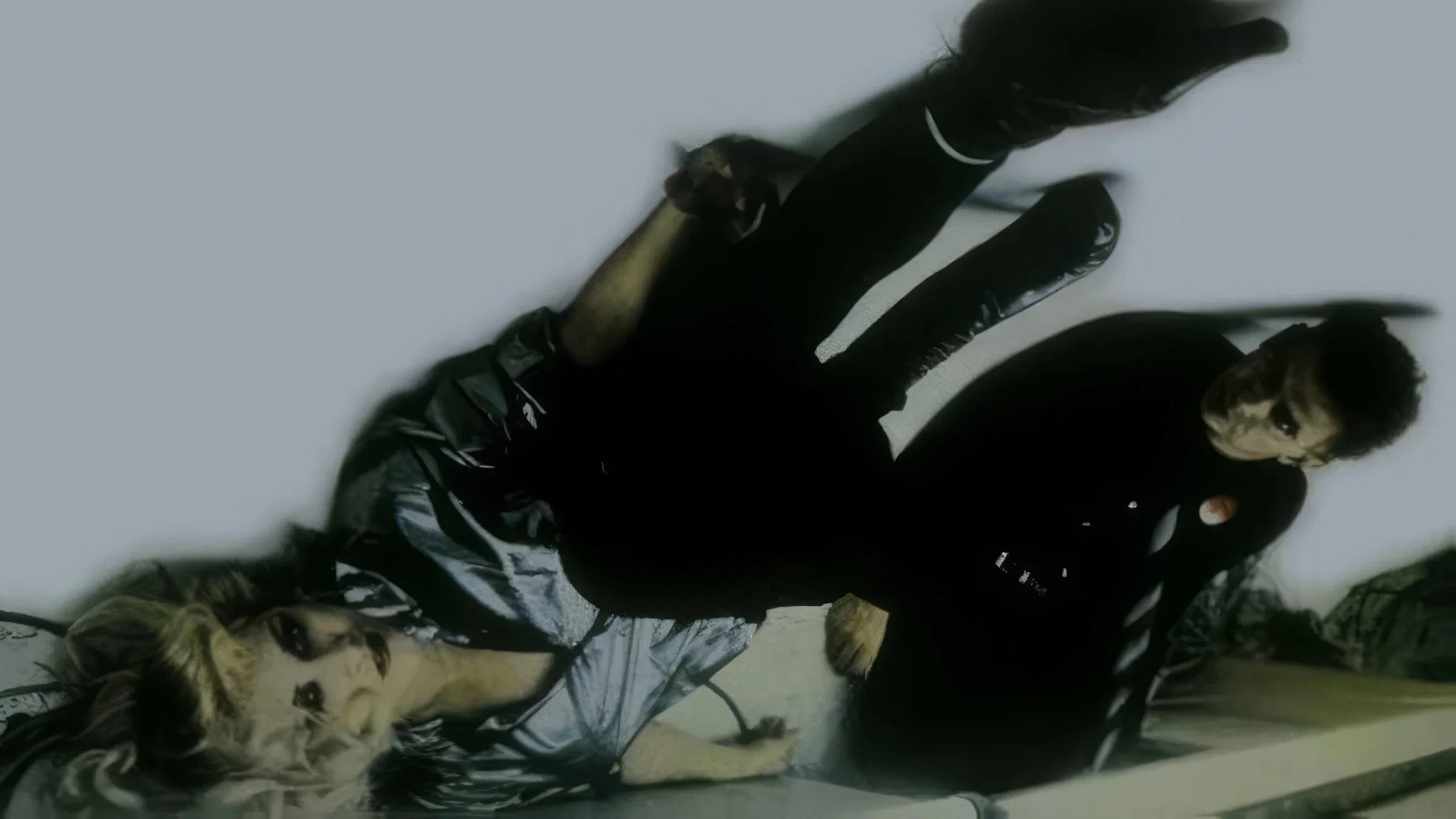
I admit it, the headline is a bit of clickbait. I like to think Maurizio Arcieri would have approved. From his days with beat group New Dada through a solo career as a pop idol, he made reinvention look like an occupational requirement. With Christina Moser in Chrisma, he became a punk nightmare for anyone still attached to the earlier heart-throb. Yes, he slashed his finger on stage. Now that I have your attention, though, there is a record I want you to hear. Chrisma are my favourite post-punk band, and almost nobody I mention them to seems to know who they are. Their 1979 album Hibernation is where I would start.
Their second album, released before they changed their name to Krisma, is the record I would put in somebody’s hands first. Recorded in London and Milan, with Niko Papathanassiou producing, Hibernation captures a partnership whose ambitions extended well beyond the country they came from. Even the original transparent vinyl suggests an unwillingness to leave the ordinary details alone. Writing in Intrepido in 1979, broadcaster Gianni Boncompagni described Arcieri recording in London, performing in Paris and working with musicians of different nationalities. I like the practical restlessness of that picture: the travel, the encounters, the effort involved in finding people willing to entertain your ideas. It makes Hibernation feel like evidence of a life being actively constructed, with little concern for how neatly it would fit into somebody else’s account of the period.
The stranger stories belong to that life too. In an interview with Graziano Origa, Moser recalled making the video for Aurora B., a track from Hibernation, with its simulated sex around Piccadilly’s underground spaces and staged suicide. She also remembered Arcieri’s earlier razor incident and the premature end of the tour that followed. Retold decades later, these episodes can become almost cartoonish, reducing two people to a collection of outrageous gestures. Yet the same interview contains a detail that changes the picture. Moser said she had written almost all their lyrics and insisted on approving the words when others contributed. Here was someone with precise ideas about what she was prepared to sing. Her authorship deserves to survive alongside the anecdotes. Otherwise, we end up remembering what happened to a man’s finger more readily than what a woman wrote.
Their Italian identity adds another complication. The familiar histories of post-punk tend to send us back to the same British and American cities, and Chrisma require us to look elsewhere. But Arcieri resisted the suggestion that nationality had held them back. Asked about it by Marco Bercella in an OndaRock interview, he said it had mattered little: they lived in London as Swiss, referring to Moser’s Swiss background, and sang in English. Delays in their Italian releases bothered him more. That answer makes it difficult to cast them as overlooked outsiders simply waiting for international acceptance. They were already moving between countries. The question, for me, is why that movement has not secured them a more familiar place in our recollection of the era. Perhaps we find it easier to remember a scene when everyone in it appears to share a postcode.
I keep returning to Hibernation because it makes those familiar histories feel unfinished. There is pleasure in finding something outside the usual recommendations, but I have no interest in keeping Chrisma obscure for the satisfaction of knowing a name other people don’t. Nor do I want to sell them through the most alarming moments of their biography. The weirdness might bring somebody through the door; the album deserves enough attention to determine what happens next. Put it beside the records you already love. Give it the time you automatically grant a familiar name. I would happily lose the surprise on people’s faces when I mention Chrisma if it meant we could finally talk about Hibernation.