
What returns when Americana does?
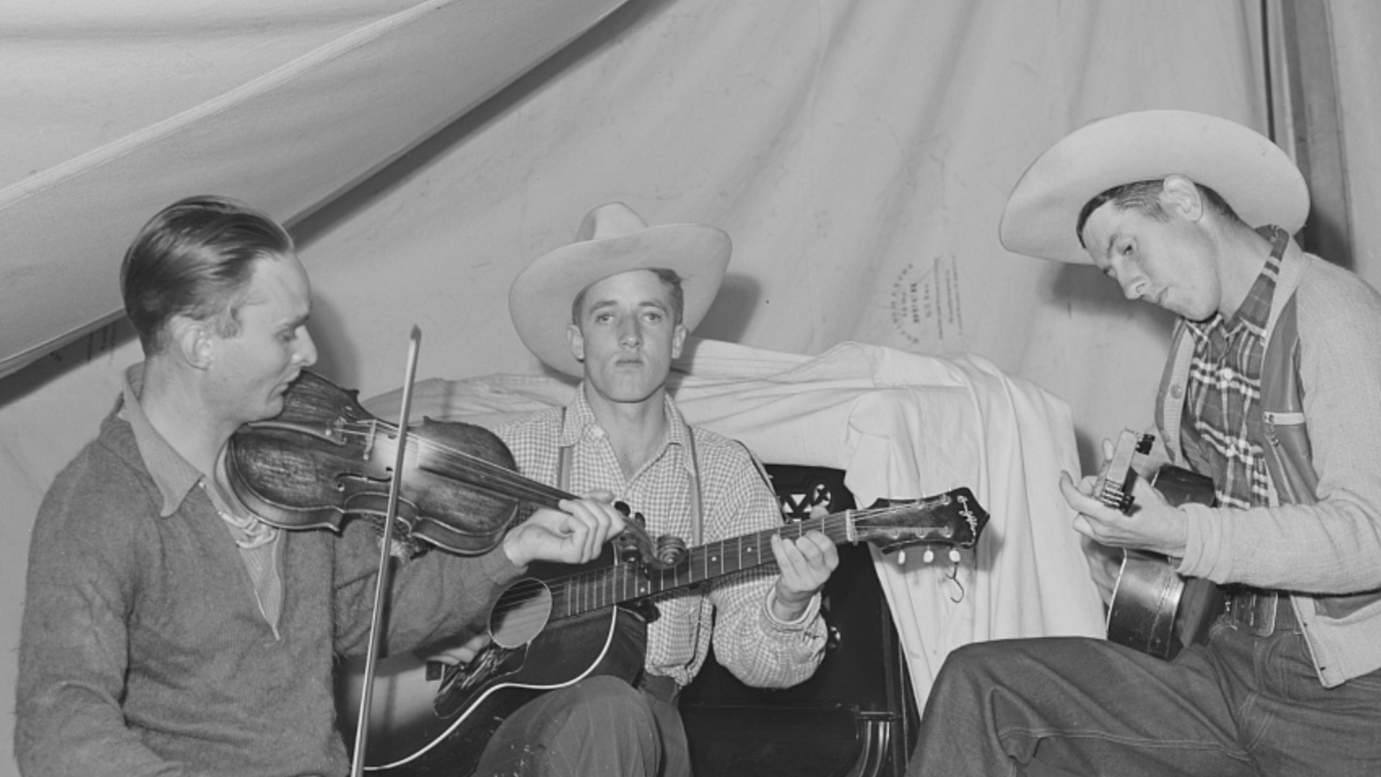
Our inbox has become crowded with a particular vision of America. There are small towns and open roads, declarations of faith, wounded men, virtuous women and families held together by values that the modern world has supposedly abandoned. The music usually arrives labelled country, Americana or Christian, but the categories increasingly bleed into one another. Any single release might be easy to overlook. Taken together, they begin to look like a cultural signal. Country and Christian music were among the fastest-growing genres in the United States during 2025, with the latter finding a younger, streaming-oriented audience. Americana listeners are younger than its weathered aesthetic might suggest. The inbox did not create the phenomenon, but it made its scale difficult to ignore.
Americana is not diminished by simplicity. A restricted vocabulary can produce extraordinary work, precisely because there is nowhere for an artist to hide. But this is also a territory that has been explored relentlessly. Another porch, another Bible, another dirt road and another sepia portrait cannot become meaningful through sincerity alone. When Americana is good, its economy feels elemental. When it is bad, its emptiness is painfully exposed. Beyoncé understood the difficulty. Cowboy Carter did not merely borrow the clothing of country music, but used it to dispute the ownership of American history and the exclusion of Black artists from a tradition they helped create. The familiar materials became contested again. By contrast, much of the weaker work now circulating seems content to reproduce the surface of a past without asking who constructed it, who was removed from it or why anyone should want it back.
Perhaps my resistance is simply the discomfort of getting older. Every generation produces critics who mistake their inability to recognise a new language for evidence of cultural decline. Punk was treated as ugly, talentless and socially dangerous, yet its refusal of accepted standards was exactly where its vitality lived. It created new aesthetics, communities and methods of production. If teenagers now dream of cowboy boots, country roads and church on Sunday, perhaps they are also finding something their elders cannot see. Young people do not owe us an idea of progress that resembles our own. But nostalgia deserves a different kind of suspicion. Punk’s crudity pointed towards an unknown future. The current Americana boom often appears to promise a return to something already settled: religious certainty, fixed gender roles, rural innocence and a nation restored to an imagined moral coherence.
None of these symbols is inherently reactionary. Faith is not the property of the right, rural life is not a political failure, and country music has never been the exclusively white tradition that its gatekeepers sometimes presented. There are artists across America, Britain and Ireland who use folk traditions to disturb history rather than sanitise it. In the darker reaches of British and Irish alt-folk, the land is rarely innocent. It is haunted by class, violence, migration, superstition and loss. Tradition becomes a way of exposing what a culture tried to bury. That feels very different from nostalgia used as reassurance, particularly when images of family, nation and Christianity begin travelling beside hostility towards feminism, queer life, immigration or any idea of social change. The concern is not that every Americana artist holds these views. It is that the genre’s most reusable symbols can make such views appear natural, wholesome and safely beyond politics.
The significance of this revival may therefore lie beyond the music itself. Rural America has once again become a stage on which the country imagines its authentic self, even as most Americans live in cities and suburbs. Its churches, farms and small towns are made to represent a moral centre from which the rest of society has supposedly wandered. Americana gives that story a landscape, a wardrobe and a voice. Perhaps a younger generation is transforming those materials into something more open, complex and surprising. Perhaps regression is being repackaged as rebellion, with nostalgia making old hierarchies feel intimate and new. The question is not whether this music sounds progressive. It is what kind of future is being concealed inside its dream of the past.
Cover photo: 1941 - Singing cowboy songs at entertainment at the FSA, Oregon by Russell Lee