
Vic Bang on keeping it human in music
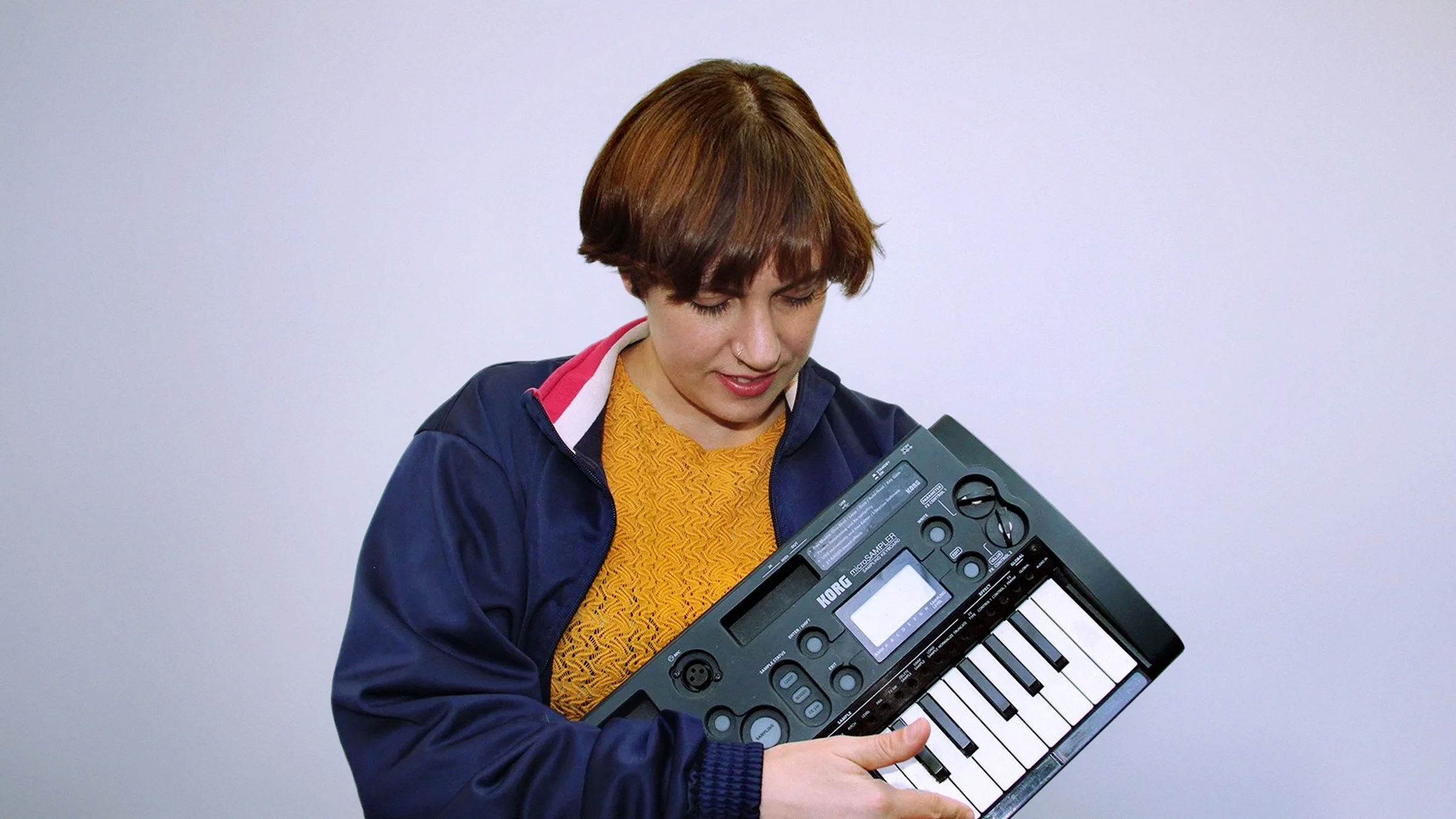
While AI-generated beats flood playlists, Vic Bang (aka Victoria Barca) is busy turning everyday sounds into something weirdly beautiful—and totally human. Based in Buenos Aires, she’s become known for piecing together tiny slices of reality—bird calls, city clatter, a snatch of conversation—into experimental electronic tracks that feel both intimate and adventurous. With releases on Moon Glyph, Kit Records, UNTREF Aural, and a fresh remix of “Autotel” on EC Underground, Vic Bang keeps redefining what’s possible, reminding us there’s still magic in the details most people miss. We caught up with her to talk about miniature sounds, finding your voice, and why she’s not worried about robots taking over music—yet.
In an age where AI-generated music is becoming increasingly prevalent, your approach feels deeply handcrafted—painstakingly sculpted from the smallest fragments of everyday life. How do you see your use of “miniature sounds” as a form of artistic dialogue, or even resistance, within the broader digital landscape of the industry today?
I’m very interested in that blurred edge between the digital and the acoustic, between the organic and the artificial. I like it when it’s not entirely clear whether a sound is real or synthetic. I think that when electronic or electroacoustic music appeared, it was a way of pushing the boundaries of the language of music — not in terms of structure, but especially in the way it sounded. It was like treating the sound as a malleable material, something that can be treated in a plastic way to build new instruments. Today we produce even more artificial sounds that can speak about our reality. But I find it beautiful when this process also brings back something that feels gentle, warm or handcrafted. I don’t approach my practice as a form of resistance to digital technologies or the music industry. Instead, I tend to use what genuinely interests me from each world. Digital tools opened a path for me personally, both creatively and technically. At the same time, I think digital technologies have lowered the cost of music production and made it possible for many people to achieve high-quality sound from their homes or small studios. I find that extremely valuable. I see the digital not as something to oppose, but as a resource — a space of possibility that can be shaped, questioned, or hybridized with physical and tactile sound practices.
If your future self could send a sonic message back to the Vic Bang who dropped ‘Whizz’ on “Lira” with Kit in 2020, what kind of glitch, texture, or field recording would you choose to show how you’ve grown? What does that sound say about your journey and where your vibe is at now?
I think it would be a long, sustained sound, slowly evolving over time — a reminder that I’m moving toward slowing down the tempo, toward a deeper and more patient exploration of sound. Maybe a sound that takes its time to develop, that slowly expands and reveals small internal movements. A sound that feels homogeneous at first, but that, when you listen closely, reveals its molecular structure — as if you were listening to it through a microscope. That’s a sound I would really like to reach.
You have a gift for transforming overlooked sounds—like bird calls, kitchen clatter, or fleeting city rhythms—into intricate, organic compositions. What’s the most unusual real-world sound you’ve “adopted” recently, and how did it end up shaping your latest work?
Last year I finished an album that was released recently, Oda, where I recorded all kinds of materials and acoustic instruments, which I then used as the sonic basis of the record. And recently I’ve been working with feedback, which is something I hadn’t explored before. Through processing, it can become rhythmic patterns, or even resemble wind-like instrumental tones. I’m interested in it because it’s immaterial — it emerges in the space between devices, like a speaker and a microphone. It’s also typically considered an unwanted sound, something to eliminate. I find it compelling to use it instead as a material for building harmonic structures out of something normally considered noise.
The world is full of inadvertent ‘composers’—from the rhythm of machines to the calls of distant birds. How do you listen for and respond to these voices in your music-making process?
When I started making music using samples, it changed my relationship with listening in general. In this kind of practice, any sound can potentially become part of a composition, so I began paying much more attention to the sounds around me. That was a very beautiful thing for me, because it transformed my everyday experience. I also find it interesting to place any sound on the same level as a musical instrument, so in that sense it can be thought of as a kind of collaboration. Later on, I started studying synthesis, and I began to pay attention to how sounds behave in general. If I hear an interesting sound in the street, I start thinking about how I could recreate it.
As listeners in 2026 seek ever more immersive musical experiences, how do you envision the sense of “space”—the air pockets, micro-melodies, and unexpected silences—in your compositions shaping the way audiences listen, move, and connect during your live performances?
In my live shows, I try to build passages that connect different pieces or musical moments, creating a kind of musical progression through different narratives. It’s hard to know exactly how audiences experience it, but I try to create something that feels coherent, engaging, and pleasant to move through over time.