
The self you can’t log out of
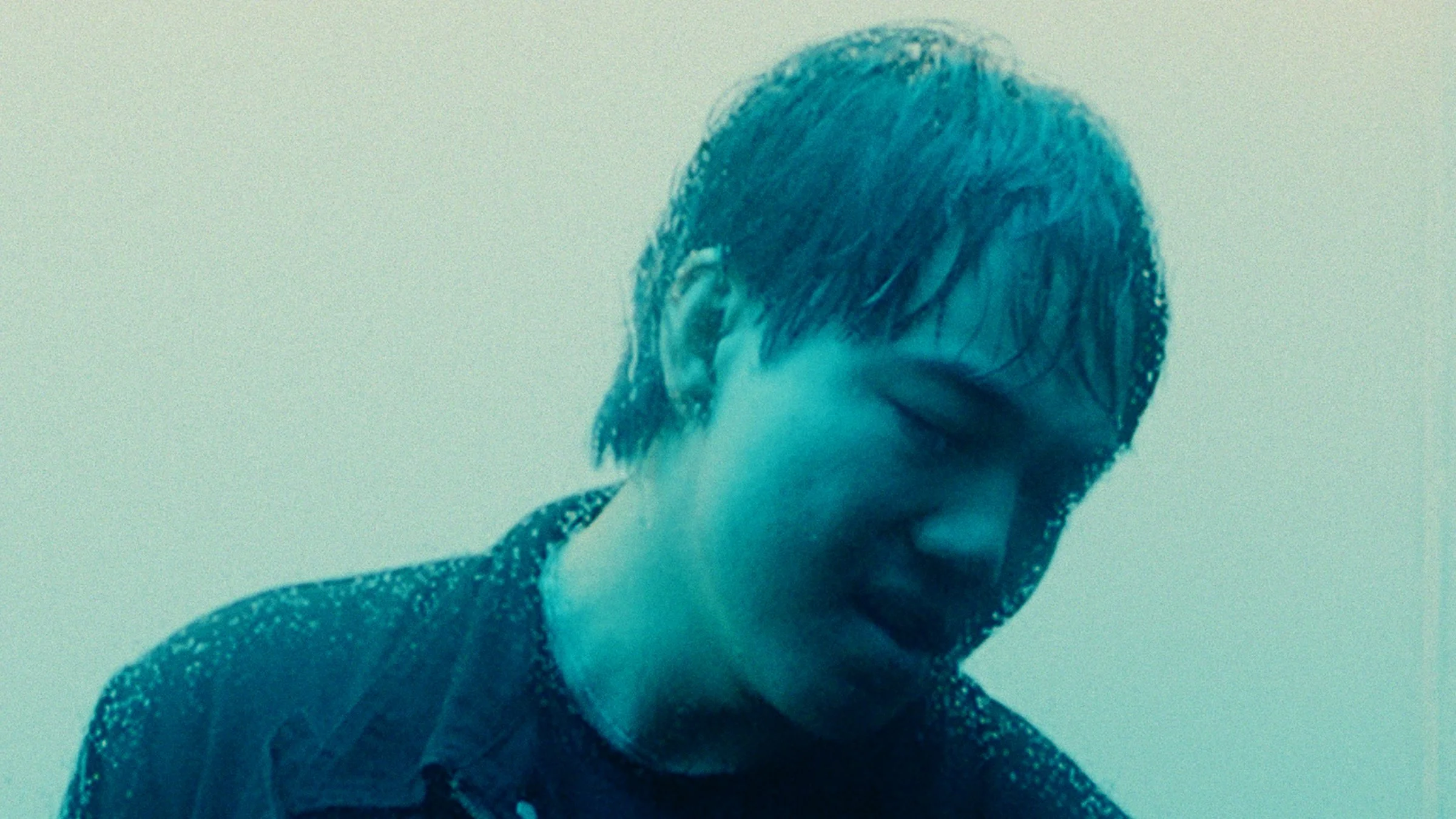
There was a time when the Internet promised transcendence. Early virtual worlds imagined escape as elevation, a clean break from the mess of the physical. What makes maybe blue’s debut album intramotion compelling is not its ability to recreate that vision, but to quietly dismantle it from within. The project builds a fictional environment, a floating techno-futurist island named “stellar,” yet never fully commits to the illusion. Instead, it exposes the seams. Interfaces, surveillance feeds and avatars are not tools of immersion but reminders of mediation, of the distance between presence and projection. In that sense, intramotion sits in a growing lineage of post-internet works that no longer celebrate digital identity as expansion, but question it as fragmentation. The Vietnamese-American artist positions himself at the centre of this tension, not disappearing into the concept but standing in front of it, almost interrupting it.
The album arrives at a moment when digital identity has shifted from possibility to obligation. We are no longer experimenting with versions of ourselves online; we are maintaining them. Profiles require continuity, coherence, and constant updates. The performance has become administrative. intramotion captures that fatigue without ever stating it directly. Its narrative unfolds through fragments, visual cues, recurring motifs, and a year-long rollout that mirrors the way identity is now constructed across platforms rather than contained within a single work. The fictional world of “stellar” draws from early 2000s utopian aesthetics, but those references land differently today. What once felt futuristic now feels archival, almost nostalgic, a reminder of a time when the digital still held a sense of wonder rather than scrutiny. By placing that aesthetic alongside imagery of surveillance and interface control, maybe blue reframes nostalgia as something slightly uneasy, even compromised.
What prevents the project from collapsing into pure concept is the artist’s refusal to disappear behind it. Hyperpop, as a cultural space, has often embraced exaggeration as a form of critique, pushing identity into distortion until it becomes unreadable. intramotion moves in the opposite direction. The production may borrow from that language, but it softens it, rounds its edges, allows space for something closer to vulnerability. This is not a retreat from digital aesthetics but a recalibration of them. The warmth embedded in the record acts almost as resistance, a way of reintroducing emotional continuity into a landscape defined by fragmentation. The result is a tension that runs throughout the album, between a system that encourages detachment and an artist insisting on presence. That tension is where the work becomes most effective, and at times, quietly unsettling.
“Softly” sits as one of the clearest entry points into this dynamic. Framed around the emotional aftermath of a breakup, it avoids resolution in favour of repetition. Memory does not progress; it loops, slightly altered each time, echoing the way digital platforms resurface the past without context or closure. The accompanying visual, directed by Lloyd Lenox, marks a shift in the album’s narrative, stripping back some of the more overtly constructed elements in favour of something more intimate. Yet even here, the boundary is not clean. The personal moment exists within the same mediated framework as the rest of the project, suggesting that there is no longer a space entirely outside the digital. What changes is not the environment but the way the artist navigates it, allowing moments of stillness to emerge within a system built for constant motion.
The inclusion of blue tmrw, a collective that appears throughout the project as fictionalised versions of themselves, adds another layer to this negotiation between reality and construction. Their presence complicates authorship, blurring the line between collaboration and narrative device. Relationships are both real and scripted, lived and performed. This duality reflects a broader cultural shift, where social connections increasingly exist across multiple layers of mediation. intramotion does not attempt to resolve that contradiction. Instead, it leans into it, presenting identity as something inherently unstable, shaped as much by external systems as by internal experience. The album’s world-building becomes less about creating an escape and more about mapping that instability, giving form to a condition that is difficult to articulate directly.
What ultimately defines intramotion is not its concept but its restraint. In a landscape saturated with maximalist interpretations of the digital, maybe blue opts for something more measured, more ambiguous. The album does not announce itself as a manifesto, nor does it attempt to provide answers. It observes, it reflects, it holds space for uncertainty. By placing himself within the project rather than behind it, the artist disrupts the expectation that digital narratives require detachment to function. Instead, he suggests that intimacy and artificiality are no longer opposites but coexisting states. The effect is subtle but significant. intramotion does not just depict a digital world, it reveals how difficult it has become to separate that world from the self. And in doing so, it leaves a lingering question, not about where we are going, but about how much of us is already shaped by where we are.