
The future is 200 years old
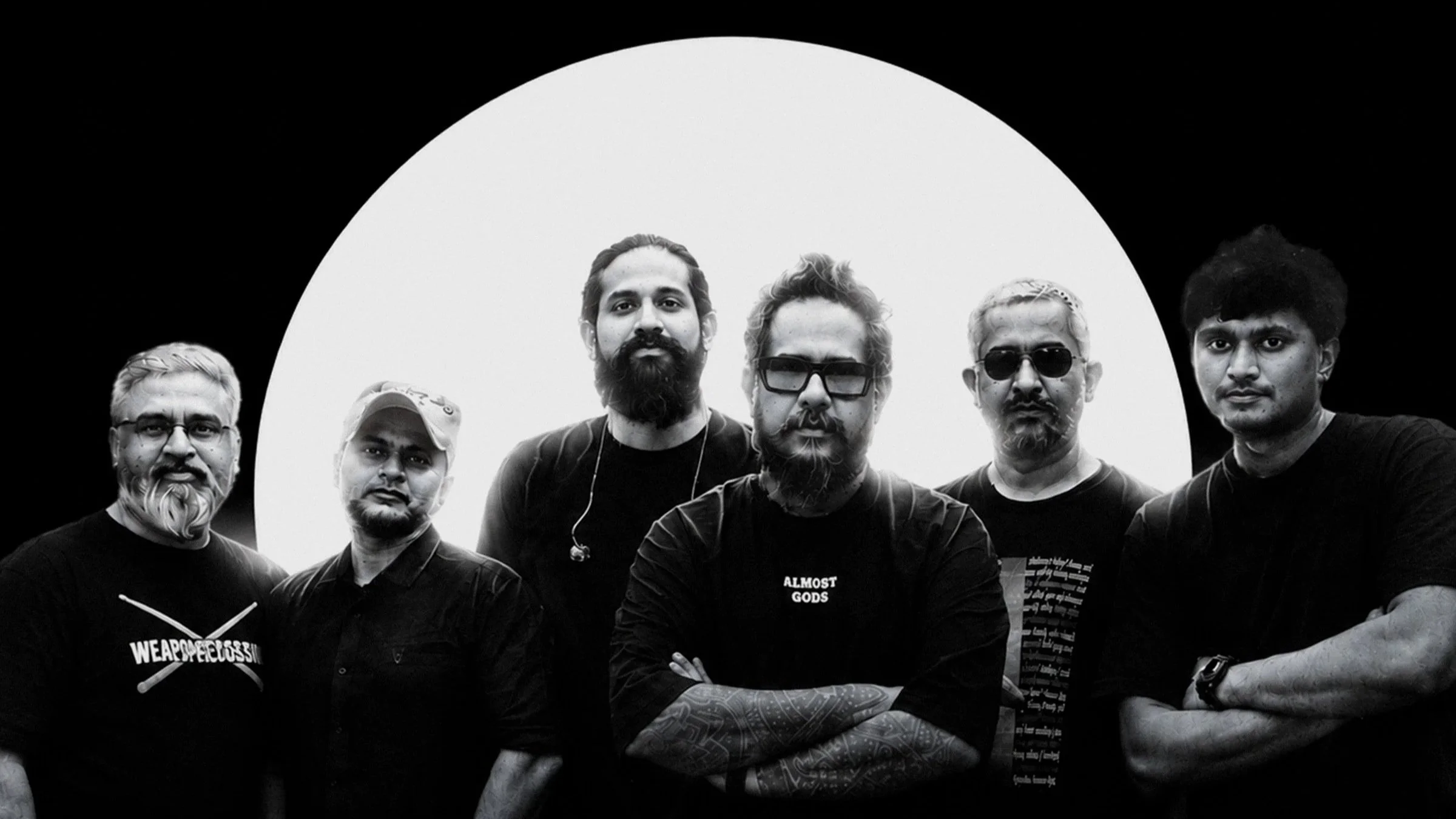
Syama Sastri died in 1827. He could have known nothing of electric amplification, progressive rock or the enormous live productions through which a composition can now travel. Yet around 200 years later, Mari Vere Gati, his Telugu composition addressed to the goddess Kamakshi, sits at the centre of “The Ascension”, the new live release from Bangalore ensemble AGAM. Its central plea can be reduced to an extraordinarily direct question: who else is there for me? AGAM surround it with machinery, electricity and a musical vocabulary belonging to another century, but the question itself remains stubbornly intact. Two hundred years is a long journey for a sentence that still needs an answer.
AGAM occupy an unusual position in progressive rock. For more than two decades, the ensemble have worked from within South Indian Carnatic tradition while embracing the scale and architecture of prog. Calling the result fusion is convenient, but it also suggests two separate musical cultures meeting somewhere in the middle. AGAM resist that neat division. Carnatic music is not an influence added to progressive rock, nor is rock simply a contemporary frame placed around something older. Both are allowed to exist at full strength, making it increasingly difficult to say where one ends and the other begins. That approach has sustained something much larger than an interesting musical experiment. Across nearly two decades of performances, AGAM have built a substantial audience around music that makes remarkably few concessions to the idea that complexity needs to be diluted before it can travel. Language, references and cultural specificity remain part of the proposition rather than obstacles to its growth. Their audience is not being asked to observe Carnatic tradition from outside, as heritage or cultural exhibition. It is simply where the work begins.
“The Ascension” makes that relationship particularly interesting because its source material predates the genre supposedly modernising it by well over a century. Contemporary culture tends to place tradition somewhere between preservation and renovation. Preserve something too carefully and it becomes heritage; interfere with it too much and somebody will accuse you of destroying the original. The language surrounding cultural exchange can be equally limiting. “Fusion” sounds open-minded, but it can reduce deeply developed traditions to ingredients, as though identity were created by combining percentages of otherwise separate things. AGAM seem uninterested in that arithmetic. Carnatic music does not need progressive rock to release it from the past, while prog does not emerge unchanged after encountering a musical tradition with its own sophisticated systems of rhythm, improvisation and composition. Neither side has to surrender authority.
AGAM’s longevity makes that position harder to dismiss as an experiment. It is one thing to engineer an intriguing collision for a record; another to inhabit the resulting space for decades. Given enough time, the collision stops looking like one. AGAM have developed an audience for whom the supposed contradiction is no contradiction at all, complicating an industry instinct that still prefers easily exportable categories: tradition over here, contemporary music over there, classical music in one room, rock in another. “The Ascension” refuses the same separation. Its devotional source is not hidden in order to manufacture universality, and its cultural identity is not presented as an obstacle an audience must overcome. A private appeal made in another language and another century is simply allowed to occupy a contemporary stage at full scale. Specificity is precisely what prevents it collapsing into the vague language of inspirational uplift. “Who else is there for me?” is not a motivational slogan. It is what remains when the fantasy of complete independence has failed.
That question also explains why the age of Mari Vere Gati feels less important the longer you sit with it. Technology dates quickly; vulnerability apparently does not. We have become exceptionally good at replacing the objects around us while carrying remarkably old fears through each successive version of the future. Grief, dependence, loneliness and the moment when self-sufficiency stops working would have been recognisable in 1827, even if almost nothing surrounding “The Ascension” would be. AGAM do not have to make that contradiction disappear. A centuries-old devotional work can remain culturally and spiritually specific while thousands of people encounter it under entirely different conditions. The stage changed. The audience changed. The question survived.