
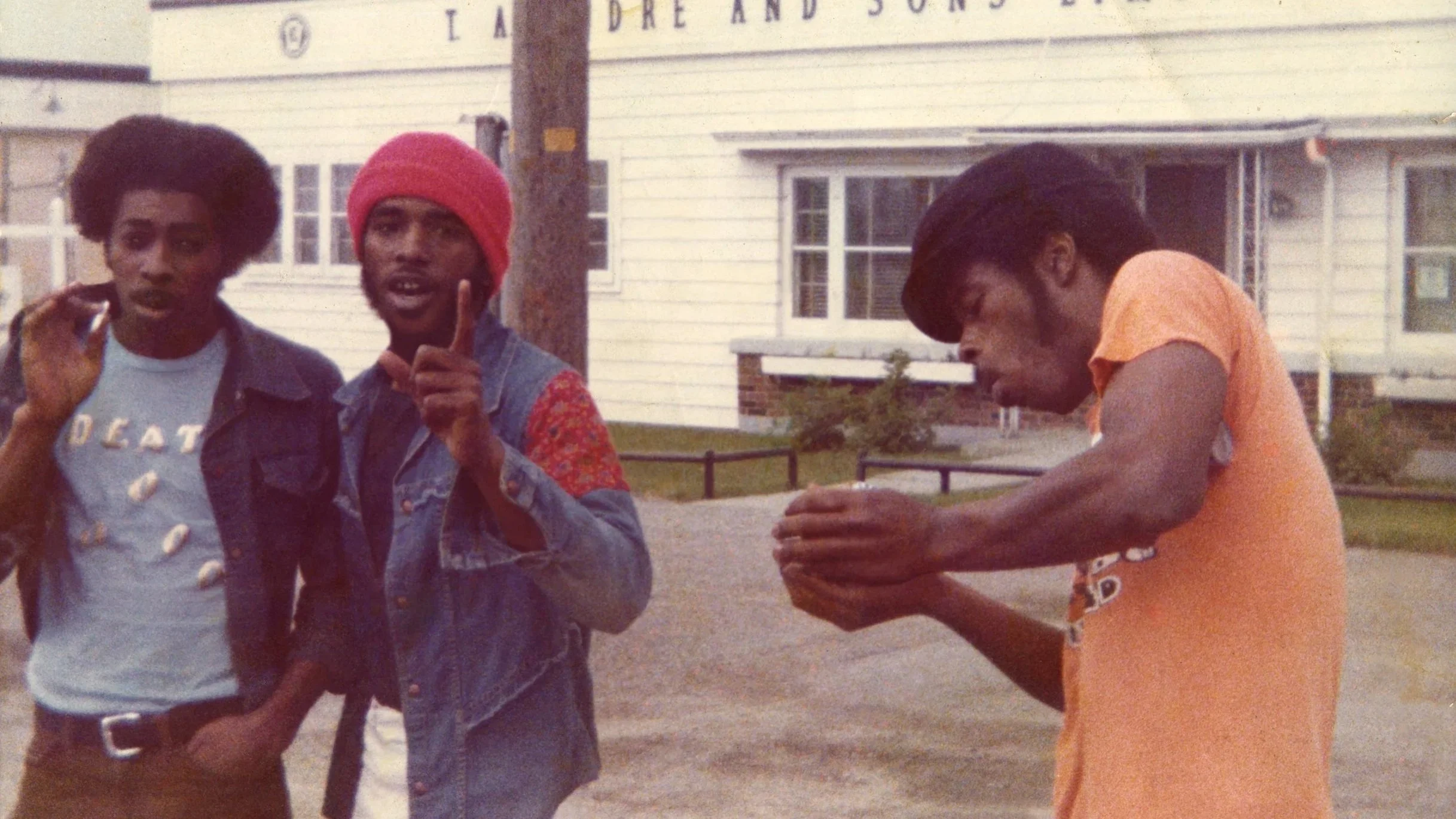
Think of the first person who made you feel your taste in music needed explaining. A school friend, perhaps, or someone behind a record shop counter who could turn a purchase into an entrance exam. You learnt which names to mention, which records conferred belonging. Eventually, you might have become that person yourself. Music offers us somewhere to feel understood, then we get busy policing the door. Death, three Black brothers from Detroit, expose something uncomfortable about that habit: how easily our idea of who belongs becomes our account of who was there.
David, Bobby and Dannis Hackney began playing together in 1971, initially as RockFire Funk Express. Their move towards rock grew from curiosity and the world around them, with an Alice Cooper show helping to encourage the change. David proposed the name Death in 1974. By 1975, they were recording the seven tracks that would eventually become ...For the Whole World to See. Here were three Black musicians pursuing ideas we would later recognise as part of punk, before its best-known British landmarks had fixed themselves in the public imagination. That makes them early participants in its formation, although declaring a single inventor would only replace one cramped history with another. Their own recollections describe a band following its interests, without waiting for a movement to give them permission. The brothers discussed those beginnings with Red Bull Music Academy.
There is a familiar temptation to make everything that followed hinge on one magnificent refusal. In Bobby’s account, an approach involving Clive Davis came with a condition: the band might secure a deal if they changed their name. David refused. It is a satisfying episode, especially for a culture that prizes independence, but a refusal has consequences beyond the moment in which it is made. Someone still has to live with the closed door. We can admire David’s conviction while recognising how comfortable it is to celebrate artistic stubbornness decades later, once someone else has absorbed the cost. The brothers had to decide what they could surrender and still recognise as their own. Bobby recalled the exchange in a 2009 interview with Clifford Allen.
Race makes the gap between their presence and their recognition harder to shrug off. The question Death raise is how Black musicians could help anticipate a movement and still seem, to later audiences, like an unexpected addition to its history. If your mental picture of punk cannot accommodate the Hackneys without a lengthy explanation, that picture needs work. Records reach people through businesses, journalists, collectors and friends; each helps determine what survives and what gets repeated. Drag City finally released ...For the Whole World to See in 2009. The distance between the sessions and that release is also a warning about treating the records most readily available to us as a complete account of what happened. Drag City’s catalogue documents the release.
Perhaps that is where Death become personal. Most of us know the small humiliation of being treated as an unlikely occupant of somewhere we already belong. A workplace, a neighbourhood, a conversation about something we love. Nobody necessarily orders us out; they simply keep asking how we got in. Calling Death pioneers should mean allowing their presence to change the story we tell, including the faces we picture when somebody says “punk”. Next time the conversation turns into a test of who knows their history, try asking whose history everyone learnt.
Cover photo by Tammy Hackney