
Music for the multiverse next door
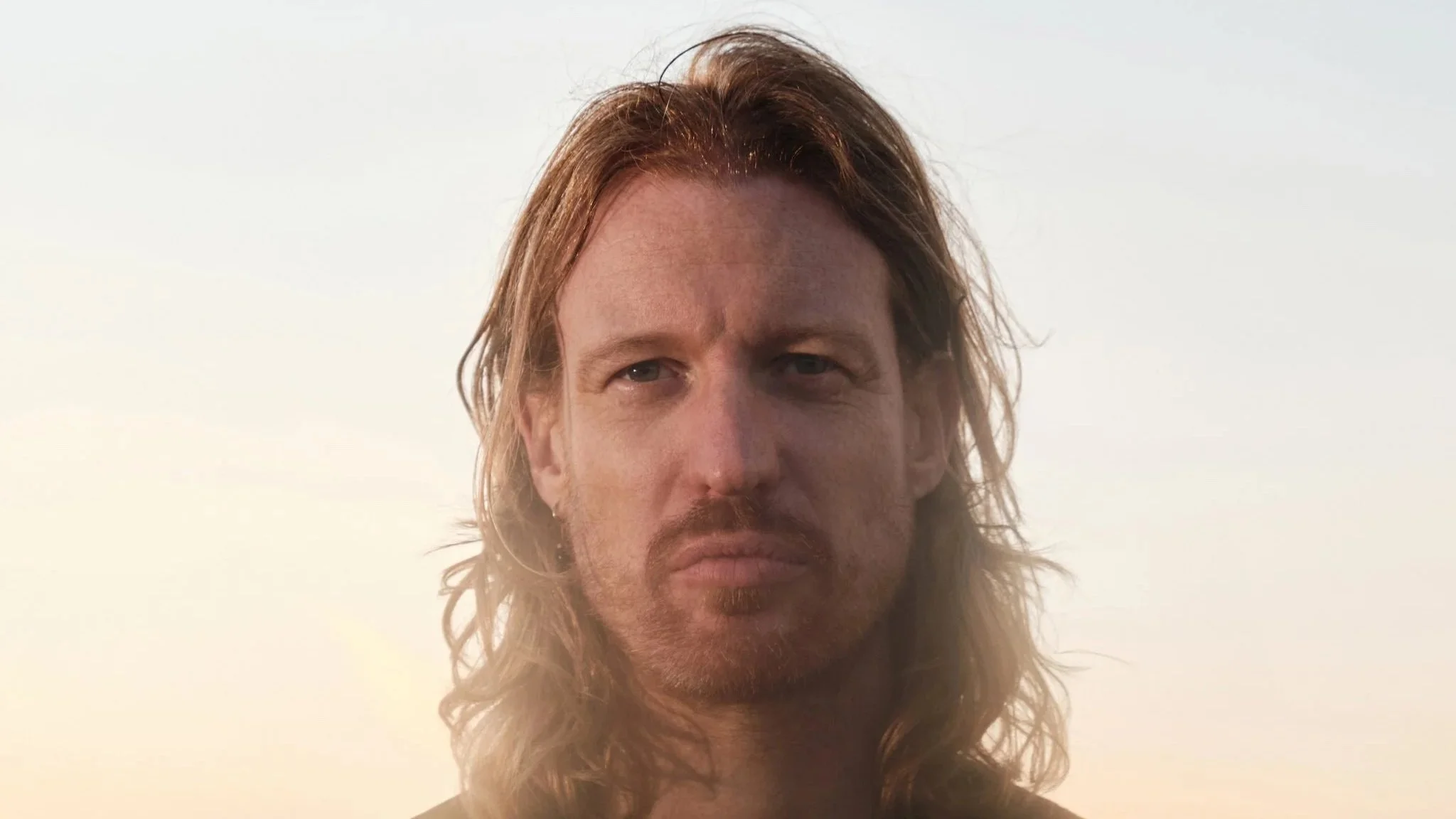
Dutch composer Andert Tysma has spent the last few years moving between rather different worlds: touring Europe with Yann Tiersen, playing venues such as the Barbican, while continuing his work as a medical doctor. Somewhere between the trains, hotel rooms and shifts, the material for Parallels accumulated. His new record brings together ideas written over several years, arranged for violin, clarinet, saxophone and modular synthesis. Rather than emerging from a single moment of inspiration, it all took form gradually, as older sketches found their place alongside newer compositions. I spoke to Tysma about the album's origins, his time in Simeon ten Holt's former home, recording at Funkhaus, and his collaboration with visual artist Julius Horsthuis for a sold-out Planetarium performance at this year's Amsterdam Dance Event.
The release describes Parallels as growing out of several years of constant movement. Where did the album begin for you? Was there a first piece, idea or moment that the rest grew from?
It didn't start with one or two tracks. I usually work with pieces that resonate with me at a particular moment, whether they're old ideas or new ones. Some of the tracks on Parallels are a few years old, and a few were made on the spot in the last year. For the past few years there has been constant movement: touring Europe with Yann Tiersen, playing places like the Barbican and Funkhaus, working with artists from other disciplines, and fitting all of that around my work as a doctor. I was writing in hotel rooms, on trains, between shifts, and the ideas I kept coming back to were the ones that stayed with me through all that. Only later, when I looked at everything together, did I see the direction I was heading in. For example, "Savoy, for Rajshri" is one of the oldest tracks on the album. It evolved quite a bit and started with the piano in the beginning. It stayed in the sketches folder for a very long time. After two years, I felt a clear direction for it and started to work on it again.
Is there a musical idea that appears in more than one piece on the album? Where does it first show up, and what changes when it returns?
There's a musical approach that returns across the album. It first appears in my track "Untitled," where I use the sax as a very textural element. When it comes back in "Savoy," it's in a different setting, more of a leading melody, that kind of emerged after recording. It feels like a different emotion even though the material and recording approach were almost the same. That's where the title comes from: parallel versions of the same thought. And it's tied to how I approached the instruments this time. On my previous album, I approached the music in a more bombastic way, with big strings and lots of players. With Parallels, I was more interested in the textures of the instruments I chose to play. I only used one violinist, one clarinet player, one saxophonist, and a simple modular synth setup. I wanted to explore the depth and richness of each instrument, and the same idea sounds quite different depending on who is playing it.
You spent time as composer-in-residence in Simeon ten Holt's home. What moment from that period has stayed with you most, and did anything about it find its way into your writing?
It was a beautiful and powerful experience to be in the home of this Dutch minimalist composer. I wasn't looking forward to being on my own in a house for weeks, but that house and the nature around it had a very calming effect on me. Simeon's grand piano was in the house and it took up nearly half of the place! It felt very easy to play this piano, and a lot of ideas came to me while I was there. I remember feeling very surprised by this at the time. I ended up keeping the working titles for the tracks "Simeon 3" and "Simeon 5" as a memory of the creative process I experienced in that house.
You recorded at Funkhaus in Berlin. What was it like to work there, and what did the space bring to the sessions?
Many things were made there! We did all the string/violin recordings with Roland Satterwhite there. All of the strings were done with one violin, in one day, together with Brian Trahan, at one of the studios in the Funkhaus. The beauty of creating is that the space you're in, the people you work with, even the smell of the room all feed the process. Funkhaus is a very inspiring environment. To me, it's the perfect storm of an unlimited Soviet budget and German engineering, put into an extremely well-designed studio complex. I love the architecture too.
Parallels is being presented live with visuals by Julius Horsthuis. What draws you to his work, and what can people expect from the show?
Julius's fractal art shows the fundamental building blocks of everything around us. What fascinates me is that fractals show a micro and a macro perspective at the same time, which makes me question how we approach "small" and "big" things as humans. To me, they kind of feel like the same thing. I experience that same unity when I make music: a tiny shift in a motif can change the whole emotional landscape. That's very close to the idea behind Parallels. I will play a show with Julius at this year's Amsterdam Dance Event (ADE), in the Planetarium in Artis, Amsterdam. I'm very excited about this show because it is in a dome with projections on the ceiling, and this makes it a very immersive experience. I got news a few days ago that the show is sold out!
The release says that even the smallest shift can lead somewhere unexpected. Was there a small shift in your own life, a decision or a chance moment, that led you somewhere you hadn't planned?
I think that happens all the time, and at every minute in your life, with each micro-decision you make throughout your day. There was one very important moment when I was watching a piano concert of a friend of mine six years ago. While listening to him play, I realised: I want to get back into playing piano too. So I borrowed a piano from a friend, and it led me down this path with my music. I also felt frustrated about not being able to track a proper bassline for a singer I was working with at the time. That was the moment I decided to take a production course to learn how to use Ableton. I think the combination of these two decisions led directly to where I am now with my music. At the time, they felt like micro-decisions, and what came from them was a total surprise for me.