
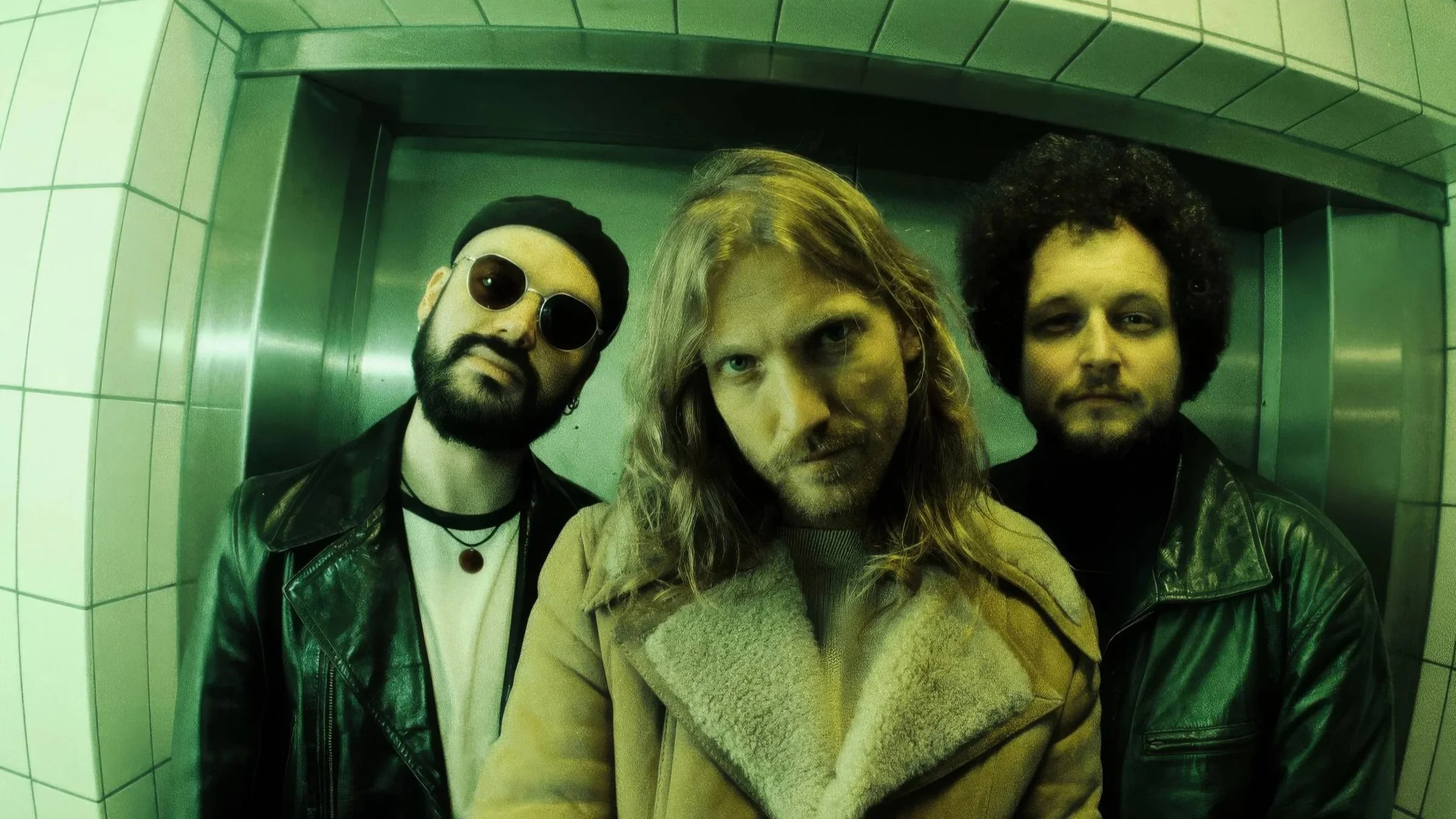
You arrive in a town where nobody knows you. By evening, someone knows a song of yours. Perhaps that earns you a drink, a seat at a crowded table, a reason to stay until tomorrow. This is the old romance of the travelling musician: carrying something people might welcome before they know anything about you. The guitar case suggests a story. Someone asks to hear it. Can you imagine setting off like that? Letting a conversation change your route. Staying because someone says you should meet a friend of theirs. Learning the name of a place after deciding to go there. Louis Puggaard-Müller spent years performing on the road before fronting Subterranean Street Society, the Danish-Dutch trio now based in Amsterdam. That detail connects him to a figure who has wandered through our stories for centuries, turning up with songs and the promise of somewhere else. You hear him play and begin to wonder about the road yourself.
Follow that figure far enough and you reach the troubadour, the wandering ballad singer, the stranger whose arrival meant an evening might take an unexpected turn. In the stories we tell about him, he carries news of distant places and knows verses someone would rather he forgot. He can make a room laugh, fall quiet or demand another song. You might be drawn to his freedom, but there is something unsettling about him too. He has come from beyond the boundaries of your ordinary life and will soon cross them again. Tomorrow, you will return to whatever needs doing. He could be anywhere. Would you envy him when the weather turned? When the money ran out? The romance survives those questions because uncertainty gives it somewhere to go. A missed lift, a dangerous place to sleep, an invitation you cannot quite trust: these are the risks gathered around the archetype. They give the departure its weight. You want him to be safe, but you want to hear what happened.
Puggaard-Müller’s own history offers a point where that old story touches the ground. ‘Kindness’ grew out of a hitchhiking trip through Ireland with his friend Stevie, taking in Malin Head on the northern coast. We do not need to fill the journey with invented adventures. Hitchhiking already asks you to leave a space in the day for somebody else. You can choose where to stand and where you hope to go. Then you wait. Think about how rarely you allow a stranger that much influence over your afternoon. A lift can bring a conversation, a recommendation, a detour. You become a brief part of someone’s life and carry a little of it away with you. There is romance in that small exchange, especially when so much travel begins with knowing where you will sleep and how long each leg should take. Would you leave room for the journey to change your mind? Would you recognise the moment when an inconvenience became the part you would remember?
Now imagine trying to explain that appeal through a photograph. You have the roadside, the guitar, perhaps a stretch of unfamiliar country behind you. The picture can hold the promise of leaving. What does it tell you about arriving? The travelling musician’s story depends on an encounter: somebody hears him, stops, asks a question. That is where the fantasy becomes interesting, because another person gets a say. You can choose how to present yourself online, select the image and decide when the story is ready to be seen. On a pavement, the response arrives while you are still playing. Someone walks past. Someone stays. You may spend an afternoon offering songs to people who have other things to do. Then a face becomes familiar, a conversation starts, and the town feels different. Perhaps that is the lost art worth thinking about: arriving with enough openness to be surprised by your welcome. Could you bear the awkwardness before it came?
With ‘Out Of Skin, Into Bloom’, that history sits inside a continuing partnership. Puggaard-Müller works alongside Ivo Johan Schot and Joost Koevoets; the band also held listening parties with fans around the album. People gathered, bringing their attention and whatever the songs might stir in them. There is a thread running from the wandering singer to that room, through the simple possibility of a song giving strangers a reason to spend time together. Eventually, some become people you know. That is where the travelling musician’s legend grows more interesting than the endless departure. Imagine returning to a town and finding someone remembers you. They ask about the journey, request a song, introduce you to a person who missed you last time. You have left something there, and now there is something to return to. Perhaps you still want to follow the stranger down the road. Perhaps you want to be the person who opens the door when he comes back.
Follow Subterranean Street Society