
You don't know you're making a hit when you're writing it. It's such a simple observation from Harlee, yet it exposes one of the great contradictions of the music industry. Something happens organically, a combination of creative instinct, circumstance and timing, and suddenly you're expected to reproduce it. How do you return to the state of mind that made something possible when you're now conscious of its commercial potential? Harlee was only 19 when she co-wrote ‘Lonely’, the Joel Corry collaboration that would introduce her to a massive audience. At the time, she wasn't particularly concerned with where her songs would end up or how they might define her as an artist. She was learning, making connections and finding her feet. “I think ‘Lonely’ gave me a platform more than it shaped my artistic identity. It was such an unexpected success and it opened a lot of doors for me, which I'll be forever grateful for, but at the same time, I can't lie and say I didn't feel the pressure going forward. You don't know you're making a hit when you're writing it, so to consciously think about making another hit, you're definitely going to feel the pressure. It's an unnatural process. We don't know why songs work and why songs don't. I think in this case, everything clicked at the right moment.”
What's refreshing about talking to Harlee is that she doesn't subscribe to the romantic notion that commercial success and artistic integrity are incompatible. Why should an artist have to apologise for making something that millions of people connect with? Nor does she retrospectively diminish the importance of the records that brought her here. “I co-write all the songs I'm part of, so there's always a piece of my heart in the recipe. I knew deep down with the big dance records that they weren't my sound. I absolutely love dance as it gave me a platform and it's what introduced me to the industry, but I also knew I wanted my own project to be pop and R&B, with a chance of that also changing again in the future.” There's a distinction here between participating in something creatively fulfilling and finding a space in which to develop an identity of your own. The two can coexist, although recognising that and having the confidence to act on it are very different things. “There was a time in 2023 when I only wanted to be a writer because I couldn't figure out the artist thing and separate it from the dance features I was doing. Looking back, I think I was afraid of failure, I wasn't ready to go all in and I also thought I wasn't good enough.”
It's worth dwelling on that admission. From the outside, commercial success might appear to be the ultimate antidote to self-doubt. Yet here was an artist with tangible evidence of her abilities contemplating stepping away from her own artist project because she questioned whether she was good enough. Perhaps one of the difficulties of finding success so young is that you're still discovering who you are while other people are already forming an idea of who you should be. And those perceptions can be remarkably persistent. Harlee is nevertheless pragmatic about the choices she made. “With ‘Lonely’, it made sense to continue the dance features because it's how I got a name for myself. I was able to perform at some crazy venues, hear my voice on the radio, gain an amazing fanbase and get in some big writing rooms. When the opportunity presents itself, you've got to go for it and not overthink it too much.” There's no bitterness here, nor any attempt to rewrite her past. If anything, her experience challenges the rather simplistic idea that integrity is measured by how many commercial opportunities an artist turns down.
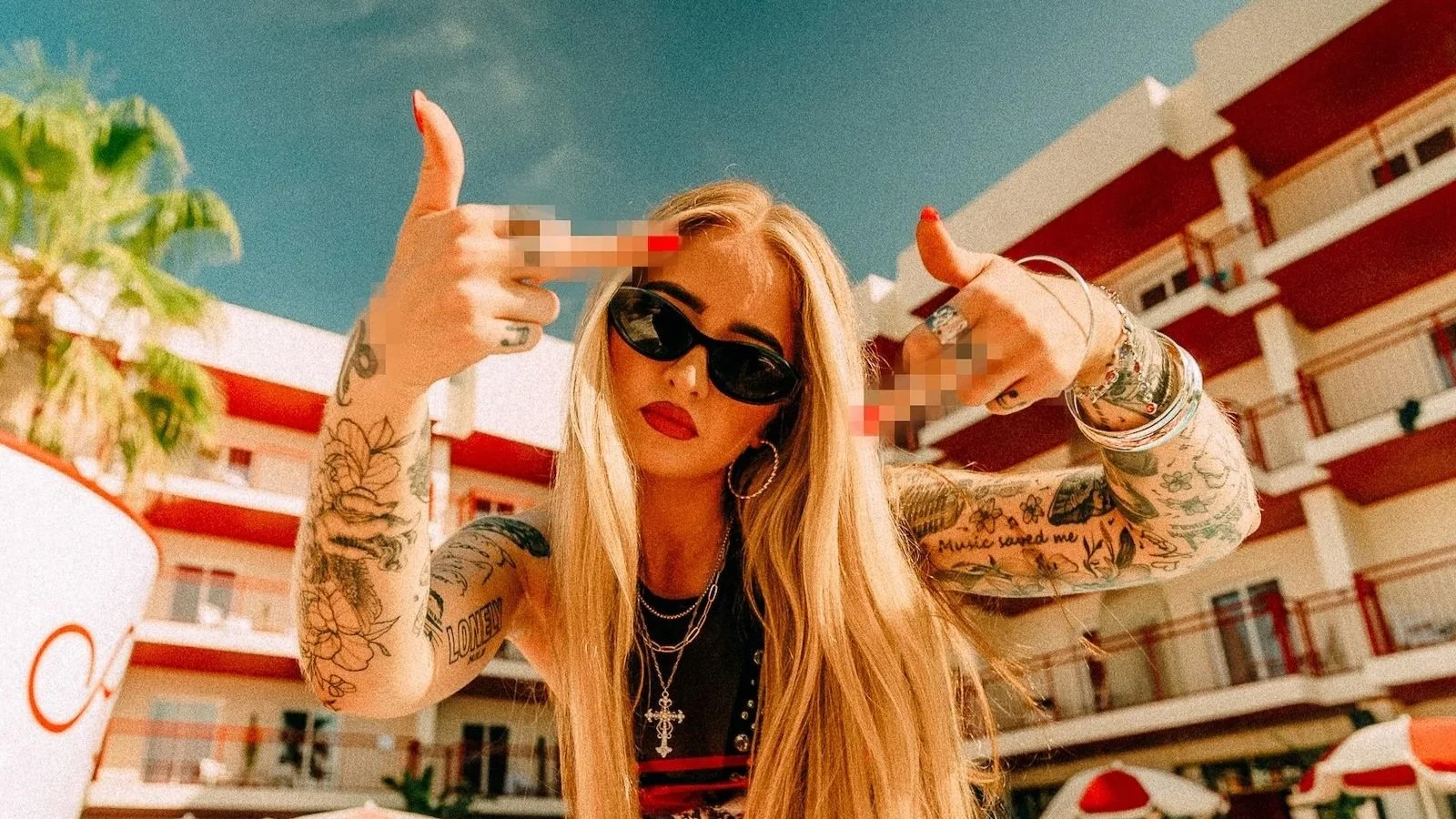
The arrival of ‘Don't Get Mad, Get Even’ marks the culmination of a much more personal process. Harlee had previously considered releasing a solo EP but couldn't quite identify what was missing. Interestingly, when she talks about finally finding that connection, she goes well beyond music. “It wasn't until the making of my new single that I realised, no, it's THIS. This just makes the most sense with who I am, what I want to say, the clothes I wear, my tattoos, what I stand for, my musical inspirations and the way I like to sing.” It's a fascinating description of artistic identity, not as something manufactured in a recording studio but as an extension of the person who exists outside it. And even now, having found something that feels so instinctively right, she's reluctant to draw permanent boundaries around herself. “Even though I'm transitioning into the pop and R&B world, sometimes I get the urge to make a rock album, and who knows, someday I might.”
Perhaps the most difficult part of evolving as an artist is accepting that not everyone will evolve with you. Audiences develop emotional attachments to particular versions of the people they admire, sometimes forgetting that those people are going through the same changes, uncertainties and contradictions as the rest of us. “I've definitely held myself back from change with the fear of people on the outside not being able to move with me on my journey because they only know me for what brought me onto the scene,” Harlee admits. “I do think it's still in the back of my mind, but it's not like I'm abandoning the music I started with.” What has changed is her willingness to put her own project first and accept the consequences. “It's my music journey and it's natural to lose people along the way, but then new people come along, which is fun!” Perhaps artistic integrity isn't so much about remaining faithful to a particular version of yourself as having the courage to outgrow it. Harlee seems increasingly comfortable with that possibility.