
Tape loops, panda souls and the art of not knowing
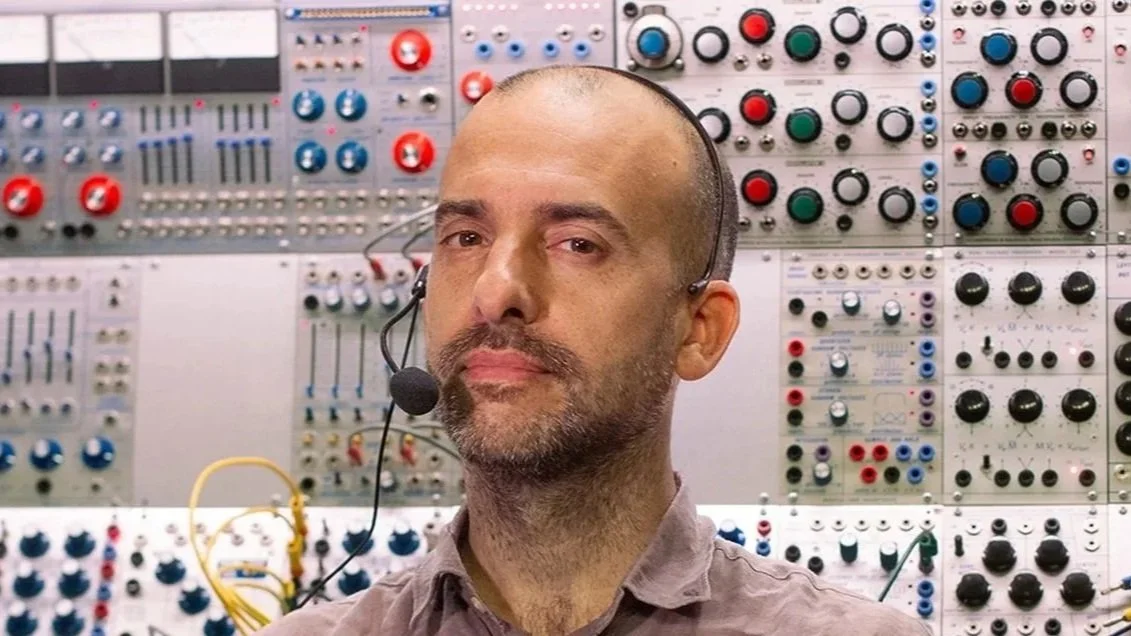
Some artists chase a single lane; Primeiro lives in the spaces between. Splitting his time between Buenos Aires and Berlin, the Argentine producer drifts from ecological river installations and IDM collaborations to meticulous, solitary ambient work. After a life‑altering accident, and years spent working with everything from Buchla systems to decaying tape loops, he has built a practice around deliberate instability. With his new album Senza Senzo, we look at how fragility and constant change have become the core of his sound.
Senza Senzo was born between Buenos Aires and EMS in Stockholm. How did these two very different environments shape the record? And when you ran those Buenos Aires sequences through the Buchla at EMS, did they take on a different psychological weight for you?
I think, in my case, it's hard to plan records and say: “I'm going to start this record in Buenos Aires and finish post‑producing it in such‑and‑such place.” It's kind of hard to plan those things. You just keep making things, recording. I'm always recording, especially when I'm on tour. And I’m mixing lots of things / projects / records at the same time, because I feel my ear gets used to tracks and tires of them easily. So it takes time, and I distract myself with other music that makes me forget what we’d been doing, in order to fall in love with it again later. So when I recorded this record in Buenos Aires, I was starting to use the Torso T1 sequencer, which was recommended to me by Martín Rucci, a great connoisseur of synths and sequencers in Buenos Aires. I guess I must have recorded it in a week or less, because all the track ideas are pretty similar to each other, and I recognize something like a bank of samples running through the whole record. But since recording and deleting on the T1 is pretty similar, or confusing, I think I deleted all those ideas, because only one stayed recorded.
Then the possibility of going to EMS came up, and the Buchla sub‑lows are really special. I was more used to the lows of Moogs, which are also particular. I went with the idea of recording subs for several projects, and thanks to Qoa, who is very good at setting up synths, we did it easily. We recorded sub‑lows for at least three records. I don't know if it adds psychological weight to the record, but without a doubt the Buchla subs and the cassette processing added a color the record had been looking for. It gave it an older, more beige tone, which it had already been seeking digitally. Now something comes to mind: a plugin I'd discovered in those days, IK Multimedia's Leslie, which makes everything sound “worse”, like in a shoebox, like in a closet.
Your practice is quite nomadic: you’ve played everything from European avant‑garde festivals to tiny, intimate spaces in Asia. How does moving between such different landscapes and crowds feed your music? Is this constant displacement something you plan, or just how your life and work evolved?
I like that idea of a nomadic practice, I’d never thought about that label or definition before — actually cool! Sometimes I feel like a panda bear who likes sleeping, and I fall into procrastination very easily. Being in constant movement really helps me a lot, because I think I have a panda soul: as soon as I stay more than a month in one place, I get sluggish and lazy about everything. So being on the road, playing every day, forces me to stay focused and to always be making music. I’m constantly adapting my live set to different contexts, making it more malleable and flexible for different festivals and venues — from intimate settings to a dancefloor, from playing by a river to playing in a church. I think it was the context, and the fact of being on stage almost every day, that really developed my live music. It helped me find a set of machines and samples that feels very much my own, a place from which I can translate how I feel that day, or how I feel I should respond to the context. It’s quite flexible, and I think the spectrum between leftfield electronics / ambient / experimental depends a lot on where we’re playing — which can be anything from the edge of a river to a classic club.
On Senza Senzo, you used a six‑meter cassette loop and even slowed your own vinyl test pressings by hand. You seem very willing to physically disrupt recordings that could stay ‘clean.’ Where does that impulse come from, and how do you know when a track feels fragile or distorted enough to be finished?
It’s all kind of an experimental coincidence, let’s say, but at the same time there are things you half‑know or barely remember (I really like forgetting). For example, the first recording device I ever had was a six‑track Tascam cassette Portastudio, which I think I eventually sold to buy a sound card. That Portastudio was incredible: you could change the pitch and playback speed, listen to the reverse side of the cassette, or record over other recordings, your own or someone else’s. Everything was very plastic, very malleable. Fast‑forward to now: my friend and partner in adventures, Qoa, took my Music for Horses records to Japan a few months before the official release. She told me she’d slowed the playback down as far as possible and that it sounded great, much more “llevadero,” because the original version was at 120 BPM. I was in Berlin at the time, so I called my friend Pune, who has a turntable, and we “adulterated” the original record by playing it at the lowest speed and literally putting our fingers on the vinyl to slow it down even more.
Later, when I was mixing Senza Senzo at EMS, we met a Polish artist, Oskar Tomala — super generous — who was building an experiment with two tape machines and six meters of tape, perfect for processing audio. He showed it to me and to Qoa, and we couldn’t believe it. When he finished his session, he left the studio to us so we could experiment with his device. That’s one of the incredible things about EMS: six studios running in parallel, fully equipped, 24 hours a day (we were there in November, so there was very little sunlight, which helps even more if you’re a little studio rat), and the possibility of connecting with other people’s processes — and often with their generosity. We spent the whole night processing audio. In the case of Senza Senzo, we didn’t just slow the tape down; every so often we’d press a finger on the tape to make it wobble, lowering the speed for brief moments and really underlining that instability of the medium. There was a lot of unconsciousness in the process — maybe it has a lot to do with trying not to be “consistent” or chasing results, not trying to make something that obviously pays off.
Your solo work is often linked to calm, meticulous ambient loops, while Lujo Asiático is much more frantic and unpredictable. Mentally and practically, what does it take to move between that solitary focus and the volatile, shared energy of a duo?
Well, playing with other people is always more fun, especially when you’ve been playing solo a lot and you’ve built up your own language. When you go back to playing with others, that language kind of falls apart – and it’s good that it does. Lujo Asiático has gone through several line‑ups over the course of the four albums. Playing with Andrés Serantes, a friend since first grade, in Lujo Asiático is amazing because we don’t need to talk about music at all – in fact, we only talk about the NBA (we’re addicts, lol!). We just have to make sound.
Calling the album Senza Senzo (‘Without Sense’) suggests a comfort with stepping away from rigid structures. In your studio practice, what does ‘working without sense’ actually look like? And did letting go of a clear narrative change how this record finally took shape?
I always work without sense, especially when I was recording this album. It’s not that I was trying to “make an album” — you just record for hours and hours and then look for the diamonds in the shit. Also, when I recorded this record I was just starting to understand the sequencer I use now (the Torso T1), and I think that not really knowing what you’re doing is closely tied to not trying to understand it, to not trying to give what you’re doing a clear meaning. And thinking about it now, more in relation to the current state of the world, it makes me wonder if it even makes sense to make music in a context that has lost its sense on so many levels. I think it does…