
You can spend hours designing a kick drum, building an impossible bass texture or pushing a synthesiser into territory its designers never imagined. But how often do you question the tempo? Electronic music has developed an almost limitless vocabulary of sound, yet we still organise most of it around a single clock. Even when our beats become fragmented, syncopated or apparently chaotic, there is usually a master BPM somewhere holding everything together. Beatdenker's Make Me Dance proposes something far more interesting: what if that clock is an unnecessary limitation? What if two or three conflicting rhythmic structures could exist simultaneously, without one being subordinate to the others? And what if the difficulty we experience following them is not evidence that they are musically unnatural, but simply that we haven't learnt how to hear them? This is where Beatdenker's work becomes genuinely exciting. It suggests that electronic music still has unexplored dimensions, not necessarily in its technology, but in our perception.
Consider harmony. We can listen to a chord and perceive several pitches as one coherent musical event. A trained musician can go further, following individual voices within a contrapuntal composition while simultaneously understanding their harmonic relationship. That ability has been cultivated through centuries of musical practice, notation and education. Medieval European music offers an instructive example: written traditions of monophonic chant gradually incorporated increasingly elaborate polyphonic techniques, eventually developing complex systems of independent melodic lines. Of course, polyphony existed in other cultures, and humanity did not suddenly discover the ability to hear multiple notes in medieval Europe. The important point is that musical perception and musical culture develop together. We learn to recognise structures that initially seem unfamiliar. Could something similar happen with rhythm? Could future listeners hear three independent tempos as naturally as we hear three notes forming a chord? There is already fascinating evidence that our rhythmic expectations are shaped by experience. A 2024 study published in Nature Human Behaviour examined rhythmic perception across 39 groups in 15 countries and found substantial cultural differences in the patterns listeners instinctively recognised and reproduced. Research into musical development has also shown that infants can distinguish unfamiliar rhythmic structures that adults from certain musical cultures struggle to process. In other words, what feels rhythmically natural is partly something we learn. That doesn't establish that simultaneous independent tempos will become effortless, but it makes the possibility considerably more interesting than science fiction.
Karlheinz Stockhausen was investigating related questions seventy years ago. In Gruppen, composed between 1955 and 1957, he divided the orchestra into three independent ensembles, each with its own conductor and, at various moments, its own tempo. This wasn't simply complicated notation or a theatrical exercise. Stockhausen was exploring the possibility of multiple temporal structures existing within one composition. His thinking connected duration, rhythm and pitch, treating musical time as a material that could be organised with a sophistication comparable to harmony. Brian Ferneyhough would later take rhythmic complexity into extraordinarily demanding territory, while South Indian Carnatic traditions had already developed intricate systems of rhythmic cycles, subdivisions and mathematical relationships over centuries. These are different musical philosophies, not interchangeable examples of complexity, but they share an understanding that rhythm contains far more possibilities than a succession of evenly spaced beats. Electronic musicians have the technological freedom to investigate these relationships without the practical difficulties of coordinating three orchestras. Yet the grid remains remarkably dominant. Aphex Twin, Autechre and Flying Lotus have all challenged conventional rhythmic expectations in different ways, from displaced percussion to evolving algorithmic structures and elastic grooves. Beatdenker belongs within this wider conversation, although his particular interest is the coexistence of rhythmic dimensions. A polyrhythm such as three against four can still share a common cycle. Polymetre can establish independent patterns of different lengths, while genuine polytempo allows simultaneous pulses to progress at different speeds. These distinctions matter because the challenge is not merely to make a beat sound irregular. It is to rethink the relationship between the different clocks operating inside a composition.
Make Me Dance takes this proposition into the studio. Beatdenker, the musical identity of Jo Wespel, constructed the album without a fixed tempo grid or click track, developing its principal percussion through finger drumming rather than quantised programming. But removing the grid is only part of the story. Human timing alone does not create multidimensional rhythm, and a loose performance is not necessarily a complex one. What matters is how independent rhythmic structures interact. On Funky 3000, Beatdenker describes a recurring bassline that provides continuity while the kick, hi-hats, additional bass textures and KID BE KID's vocals establish different rhythmic identities. The bassline becomes a reference point without forcing every other element into the same relationship with time. Elsewhere, I'm Enough moves between contrasting rhythmic structures, half-time passages and abrupt changes of energy. There is an interesting paradox here. The album originated from KID BE KID challenging Beatdenker to make his music as danceable as possible without abandoning its complexity. Rather than translating his ideas into familiar club conventions, he treats danceability itself as something that might evolve. After all, the body doesn't necessarily require a conventional four-to-the-floor beat to recognise movement. What it requires is some way of making sense of rhythmic relationships. And those relationships can be learnt.
This is perhaps the most radical implication of Make Me Dance. We tend to imagine musical progress as the invention of new instruments, new production techniques or new sounds. But what if progress also involves developing new listening abilities? What if the next significant change in electronic music happens not inside the synthesiser but inside the listener's head? We already know that musical training and cultural exposure influence rhythmic perception, although there are cognitive limits and no guarantee that every complex structure can become intuitive. Nevertheless, the possibility is extraordinary. Imagine composing without choosing a master tempo, allowing several independent rhythmic systems to develop, intersect and separate. Imagine listeners capable of following those relationships without searching for a single dominant pulse. Imagine a dancefloor where movement is organised around several simultaneous interpretations of time. Beatdenker isn't claiming to have achieved that future, and Make Me Dance doesn't need to be presented as the invention of something entirely new. Its value is in pushing an existing field of experimentation towards a question electronic musicians should find irresistible. We've spent decades expanding the spectrum of sounds we can create. Perhaps it's time to expand the dimensions of music we can perceive.
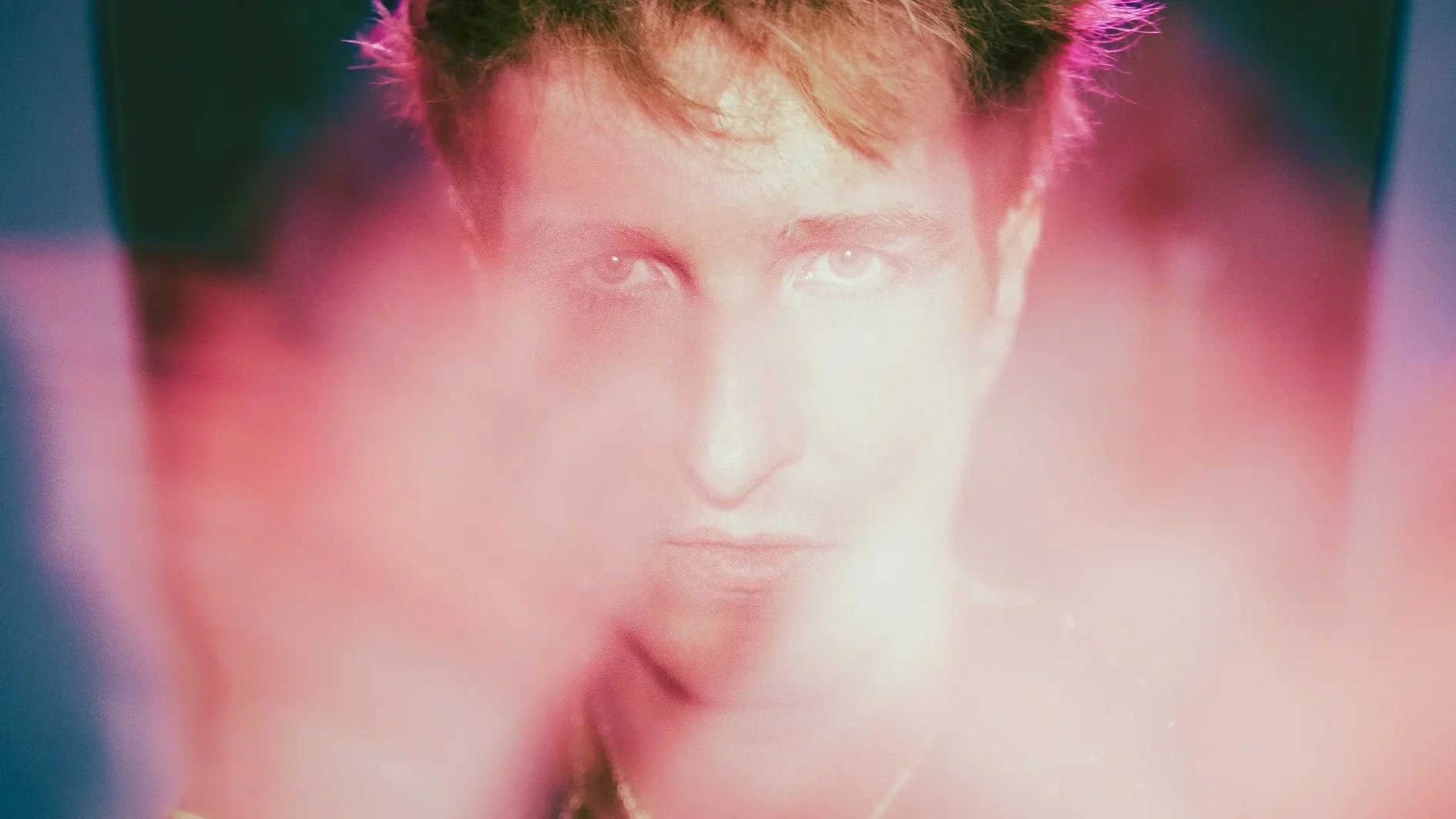
Cover photo by Sanni Tzsch