
Doomscrolling through catastrophe while trying to carry on as normal
There is a strange contradiction at the heart of modern life. Human beings have never known so much about the suffering of strangers, yet it has never been easier to continue making coffee, replying to emails or watching football while that suffering unfolds in real time. This is not because people have become less compassionate. If anything, the opposite may be true. The problem is that our emotional hardware has barely changed while our informational environment has transformed beyond recognition. Evolution prepared us to grieve for people we knew, fear dangers we could see and respond to crises within our community. It did not prepare us to process earthquakes, wars, political collapse and humanitarian disasters from every continent before lunch. Somewhere between empathy and exhaustion, a new emotional condition has emerged. We have learned to live alongside permanent catastrophe. Doomscrolling has become more than a habit. It is now one of the defining rituals of contemporary life, exposing us to an endless succession of tragedies that we are expected to acknowledge before carrying on as though nothing has happened.
Maicín arrive at exactly this uncomfortable territory with “Fear The War”. Although inspired by Russia’s invasion of Ukraine, the song is less interested in geopolitics than in the psychological distance between observer and victim. Frontman Matt Hurley wrote it after catching himself questioning why he was sitting safely in a pub watching an Everton match while people his own age were suddenly fighting for their lives. It is not survivor’s guilt in its traditional sense, because nothing has been survived. It is something quieter and perhaps more common: the uneasy awareness that luck, geography and circumstance often separate ordinary lives from extraordinary tragedy by little more than an international border. There are no grand political statements here and no attempt to offer solutions. Instead, the band focus on a feeling that millions of people recognise but rarely articulate. We witness extraordinary events every day while remaining trapped inside entirely ordinary routines. The gap between those two realities has become one of the defining emotional experiences of the twenty-first century.
Technology has fundamentally altered the scale of human awareness, but our capacity to process that awareness has not evolved at the same speed. We now receive more information about distant suffering in a single morning than previous generations might have encountered in an entire lifetime. News, social media and live footage collapse geographical distance, creating the illusion that we are present everywhere at once. Yet emotionally we remain remarkably local creatures. Psychologists have long argued that empathy struggles with abstraction. A single identifiable story can move us profoundly, while thousands of anonymous victims become increasingly difficult to comprehend. It is not indifference that causes this disconnect but cognitive limitation. Our brains simply were not designed for permanent exposure to global crises. As a result, compassion often gives way to numbness, not because we care less, but because there is no obvious emotional framework for carrying so much knowledge. That is why so many people find themselves switching seamlessly from watching footage of a humanitarian disaster to discussing weekend plans or scrolling through holiday photos. The transition feels uncomfortable precisely because it should.
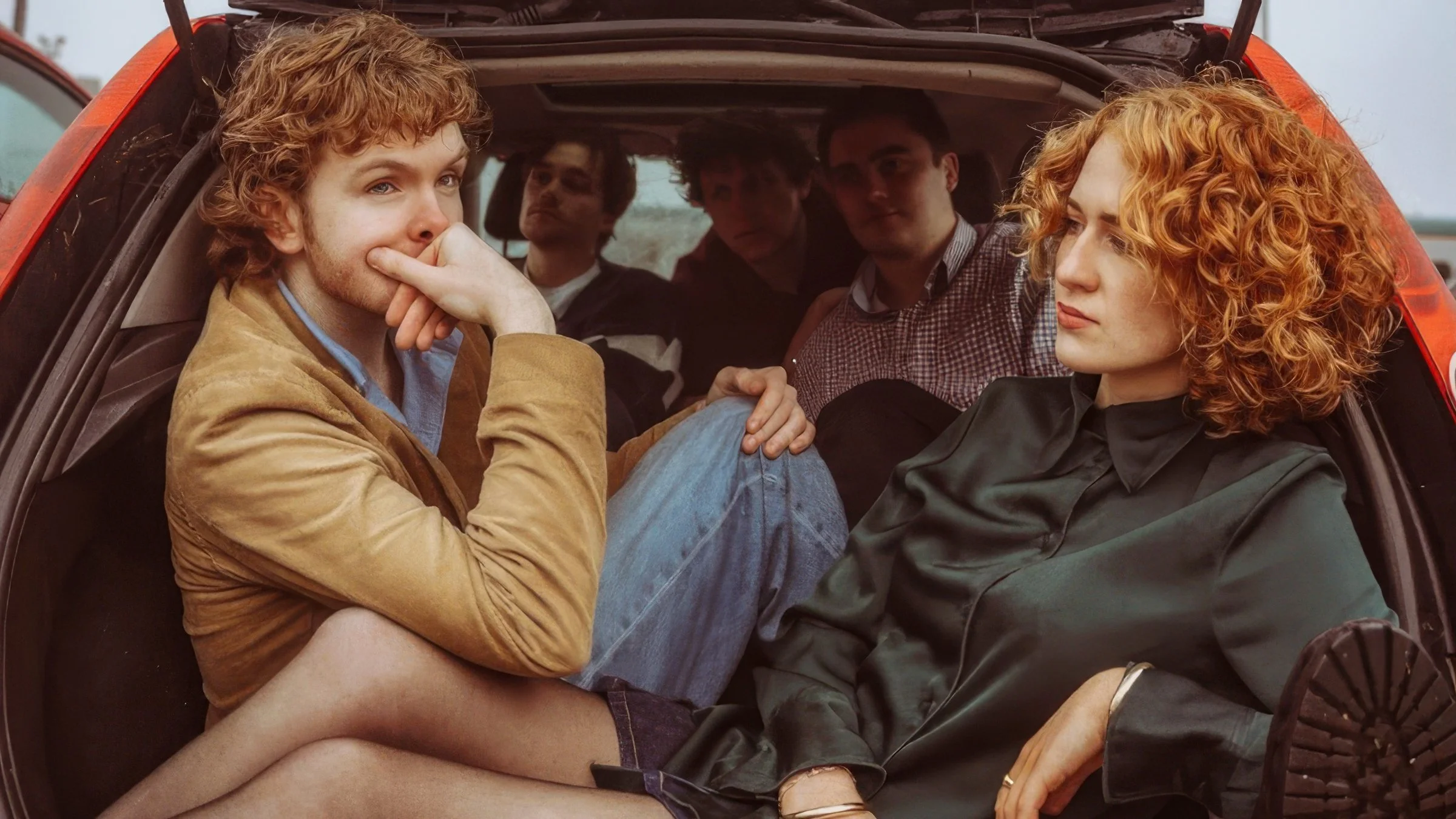
This is where “Fear The War” finds its greatest relevance. Rather than presenting conflict as something distant or exceptional, it examines the invisible psychological space that modern conflict occupies in the lives of people who are fortunate enough not to experience it directly. Formed initially as an escape from corporate burnout by architects Matt Hurley and Aidan Kelleher before expanding into a five-piece with Darragh McNamara, Méabh Fitzgerald and Ryan Daly, Maicín have steadily developed a reputation for songwriting rooted in observation rather than easy conclusions. Their self-described “Channel-Surf Rock” seems an appropriate description not only of their musical identity but also of the fragmented reality they write about, where emotions, headlines and everyday life collide without ever fully settling. “Fear The War” continues that approach by recognising that confusion is itself an honest response to the world we inhabit.
Art cannot stop wars, reverse political failures or reduce human suffering. What it can do is give shape to experiences that otherwise remain unspoken. That may be one of its most important functions today. As technology continues to compress the distance between ourselves and every crisis unfolding across the globe, we are still learning how to live with that proximity without becoming either overwhelmed or indifferent. Maicín have captured one small but increasingly universal part of that experience. Doomscrolling through catastrophe while trying to carry on as normal is no longer a personal contradiction. It is becoming one of the defining conditions of modern life.